
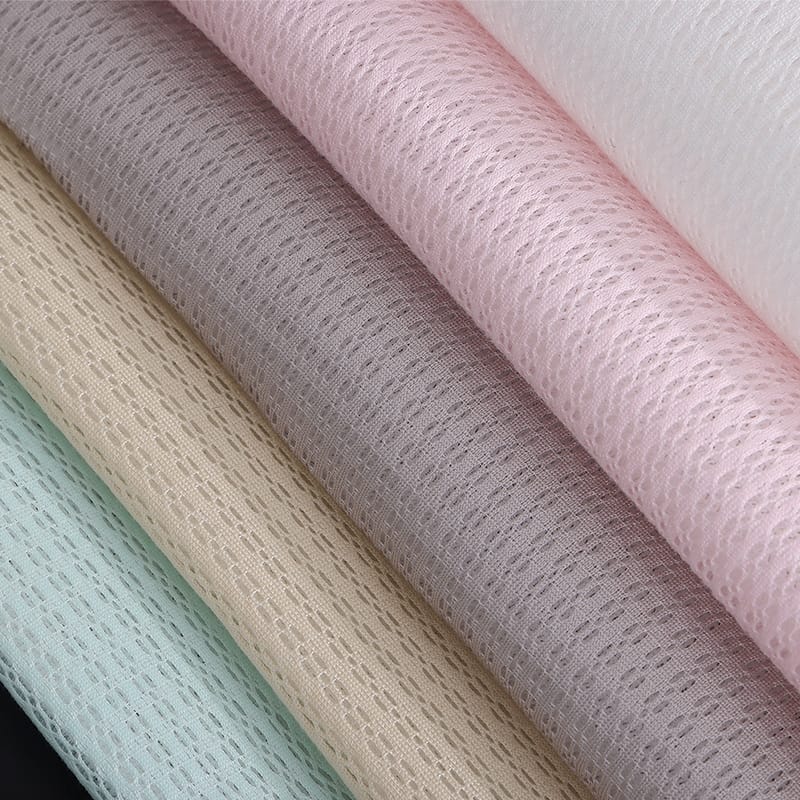
When developing a baby product, your team may already have a material preference: cotton, linen or Tencel, for example. The next step is finding fabric samples you can examine and a supplier who can discuss the requirements of your project.
AirMeshSupply offers existing blended spacer fabrics, samples and project-based discussions about adjustments to mesh aperture, fabric weight and other specifications. Two of our Tencel fabrics have already been supplied for the surface fabric of baby pillows. You can start with the materials below and request samples, or share your product type, intended fabric location and material preferences to begin a development discussion.
In sourcing discussions, spacer mesh is also commonly described as 3D mesh, 3D air mesh or air mesh, with the actual construction confirmed through the sample specifications.
Existing Blended Spacer Fabrics to Start With
These five fabrics represent part of our range, including Tencel blends, cotton blends and a linen–Tencel blend. The percentages describe the composition of the whole fabric, rather than the yarn composition of an individual face. Cotton and linen are natural fibres; lyocell is a regenerated cellulosic fibre, while TENCEL™ is a fibre brand name. Refer to the material documentation for each specification.
| Fabric | Composition | Available material and application information |
|---|---|---|
| 4-4T-W3 | 32% Tencel, 68% polyester | Previously supplied for baby pillow surfaces and other baby products. |
| 4T-S3 | 32% Tencel lyocell, 68% polyester | Previously supplied for baby pillow surfaces and other products. |
| 4C-WF1 | 46% cotton, 54% polyester | An existing cotton-blend construction listed for home textiles and bedding surfaces. |
| N906 | 42% cotton, 58% polyester | Another existing cotton-blend construction listed for home textile and bedding applications. |
| 9022-TZ-2 | 6% linen, 33% Tencel, 61% polyester | A blend containing both linen and Tencel, providing another starting point for material discussions. |
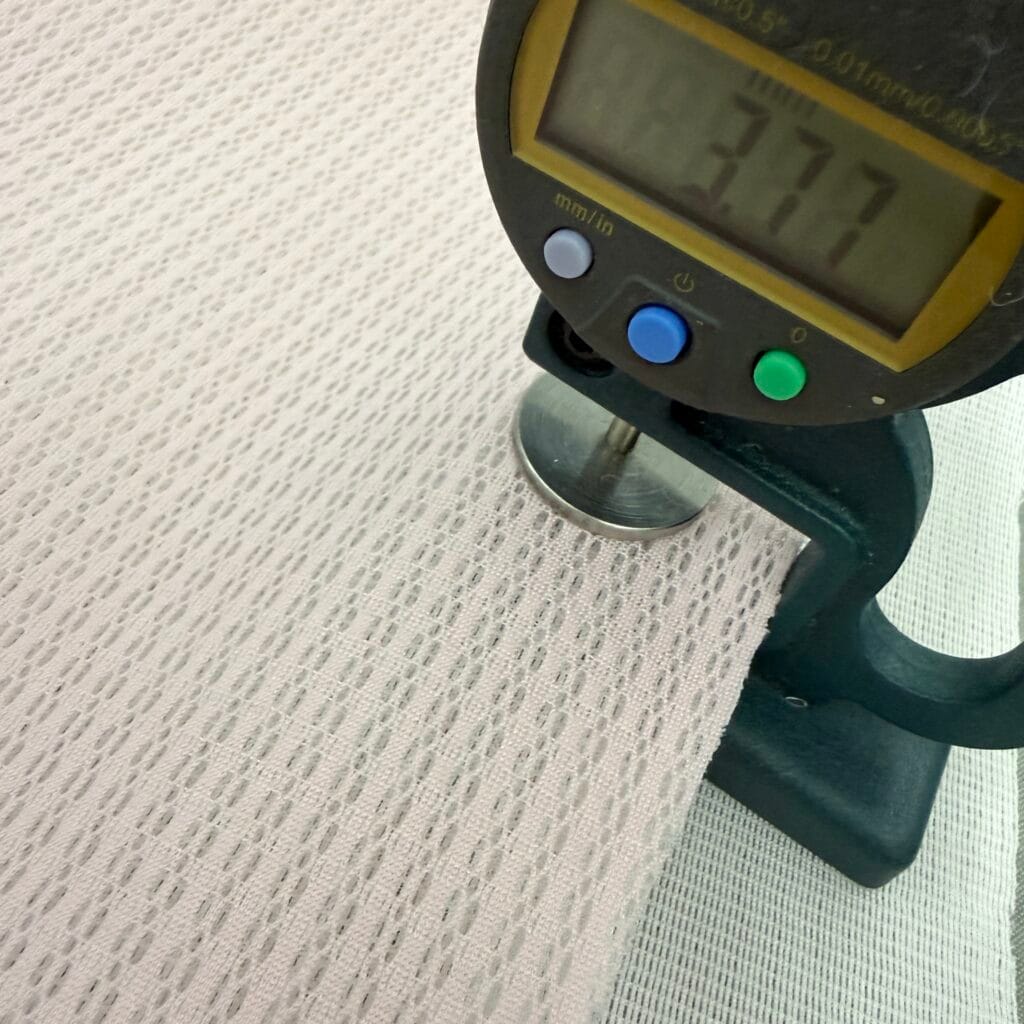
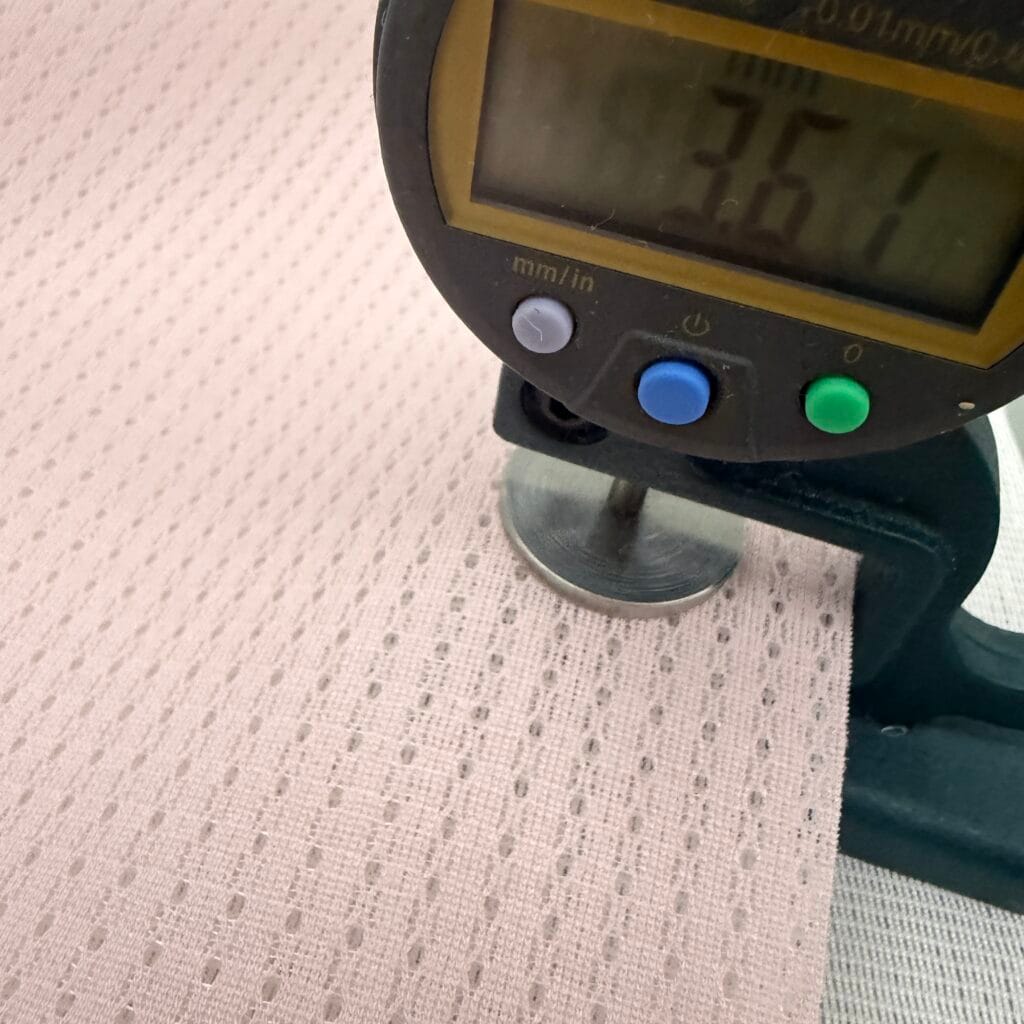
The two Tencel-blend fabrics have different surface constructions. One face of 4-4T-W3(280gsm) combines larger and smaller oval openings, while the other has a close-knit grid pattern. One face of 4T-S3(320gsm) has small openings arranged in horizontal patterns, with a fine-knit construction on the other side. Physical samples allow your team to compare appearance and handfeel alongside your own design requirements.
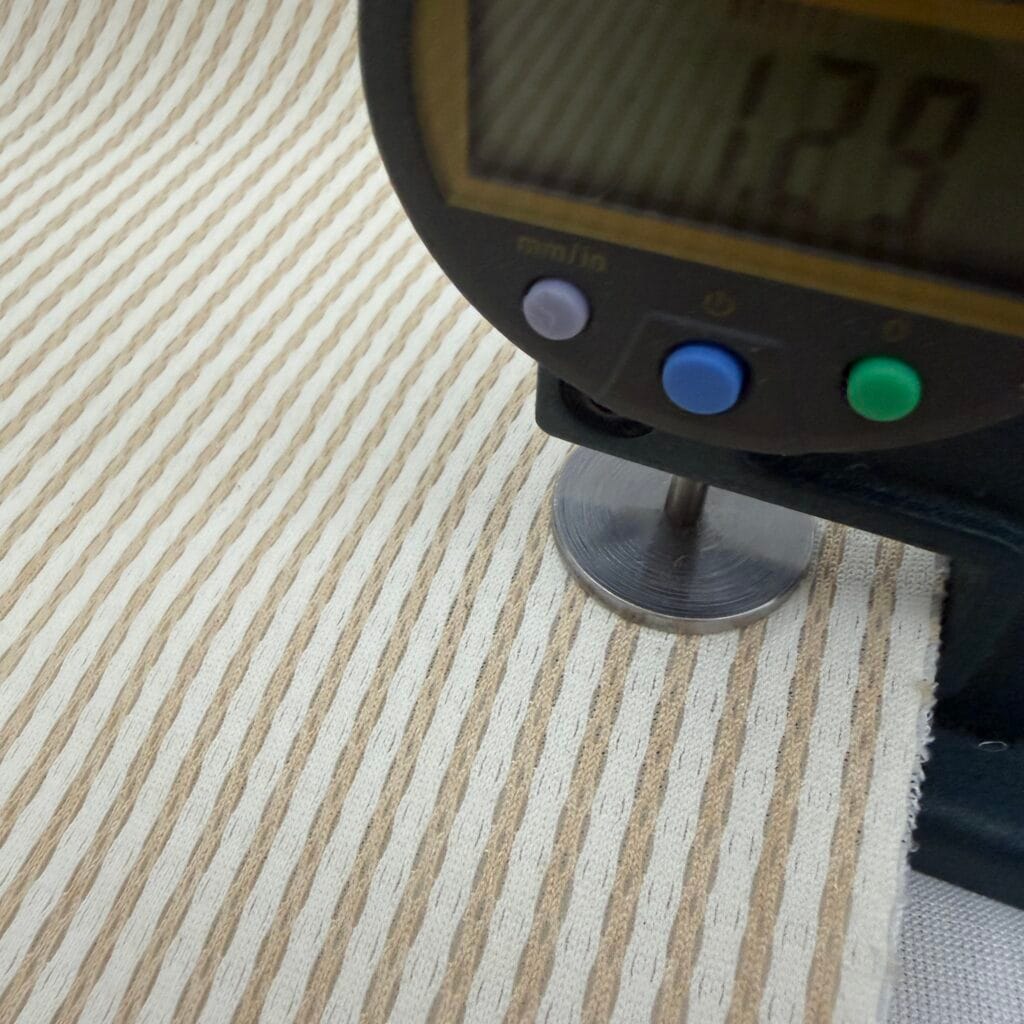
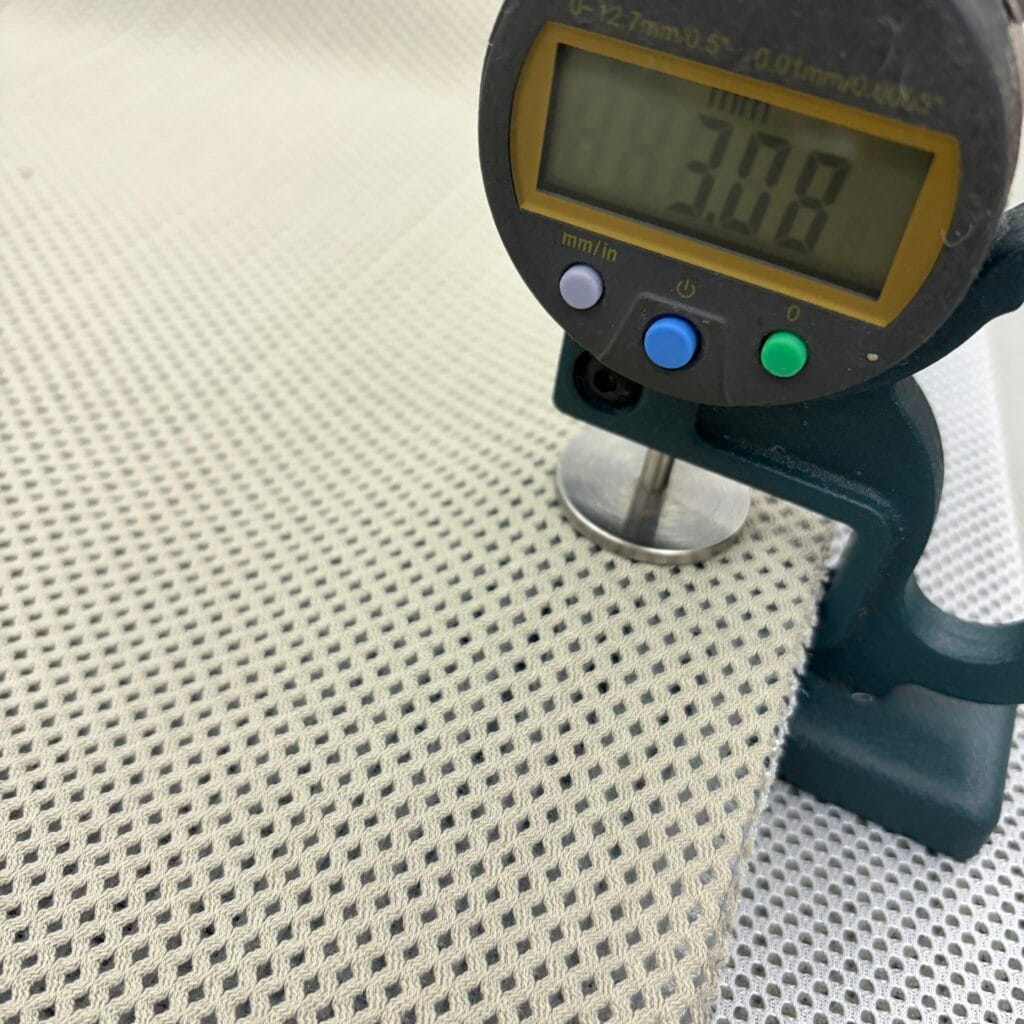
For teams exploring cotton-blend spacer mesh, 4C-WF1(320gsm) and N906(380gsm) provide two existing options. If your material brief includes both linen and Tencel, you can also include 9022-TZ-2(310gsm) in the sample discussion. These are examples of our material range; their use in a particular baby product or component needs to be assessed against that project’s requirements.
Request available fabric samples: Tell us which materials, fabric codes or applications interest you, and we will confirm sample options and shipping arrangements with you.
Existing Experience in Baby Pillow Surface Fabrics
4-4T-W3 and 4T-S3 have been used as surface fabrics for customers’ baby pillows. This gives sourcing teams an existing application to discuss and specific fabrics to request for evaluation.
That experience relates to the fabric’s supplied use. For a different product, such as a baby carrier or another baby furniture application, we can use existing samples as the starting point for a discussion about fabric placement, assembly with other components and your evaluation requirements. Final material selection depends on the complete product design and validation.
From Available Samples to Project-Specific Adjustments
You do not need to have every technical parameter settled before contacting us. If you have a target product or a material preference, the following information can help start the conversation.
Describe the Product and Where the Fabric Will Be Used
Tell us what you are developing and where the fabric will sit within the product. Is it an exposed surface, a lining or a component that will be combined with other materials? If you have a drawing, reference sample or specification, you can share it with your enquiry.
Material preferences are helpful too. You may be looking for a Tencel blend, a cotton blend or a linen blend, or you may want to compare several options before narrowing your choices. This information helps us discuss which existing samples to consider.
Use Samples to Identify the Adjustments You Need
Once you have samples, your team can compare surface appearance, handfeel, thickness and how the fabric works with your intended construction or processing. If an existing fabric differs from what you need, describe the change you would like to explore. We can then discuss the feasibility of adjusting mesh aperture, fabric weight or other relevant specifications.
Existing samples give both teams a shared physical reference. Whether to make an adjustment, how to approach it and the conditions and timing for further samples are confirmed for each project.
Evaluate the Material Within Your Product Design
For baby carriers and baby furniture projects, material evaluation needs to account for the intended location, assembly method and project testing requirements. Share the requirements you already have, as well as any questions that remain open, so we can discuss the material information and samples available.
For an example of considering fabric requirements by location, see our child car seat fabric zone guide. That article addresses child car seats; other products need to be evaluated within their own designs.
Questions About Blended 3D Mesh Samples and Development
No. The product table provides the composition of each fabric. Cotton, linen and lyocell also belong to different fibre categories, so we describe the materials by specification to help you check them against your brief.
Yes. We have existing fabric samples available for discussion. Tell us which materials or fabric codes interest you, and we will confirm the samples, colours, quantities and shipping arrangements.
We support project-based discussions about changes to mesh aperture, fabric weight and other parameters. The adjustment range and proposed sample specification depend on the existing construction and your target requirements.
You can share the intended fabric location and requirements of your baby carrier project to discuss sample evaluation. The confirmed related experience for the two Tencel blends is in baby pillow surface fabrics. A baby carrier application requires further evaluation within its own design and testing requirements.
Yes. Your product type, intended fabric location and material preferences are enough to begin a discussion. If you have a reference sample, known specifications or testing requirements, include those as well.
Request Samples or Discuss Your Project
To explore existing materials, tell us which fabrics or blends you would like to see and we can discuss sample arrangements.
If you are developing a new baby product, share the product type, intended fabric location and material preferences. We can start with our existing blended spacer fabrics and discuss samples and possible specification adjustments with you.