
Children can feel hot and sweaty in car seats, especially during long trips, warm seasons, or rear-facing use where airflow around the back is limited. For brands developing premium child restraint products, breathability and comfort have always been key elements of the user experience.
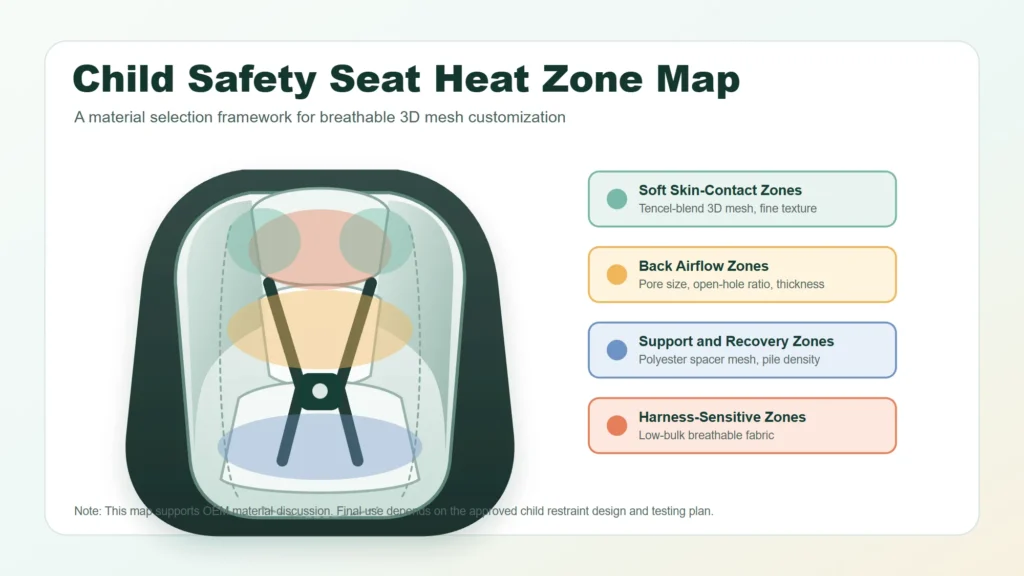
The backrest, headrest, seat bottom, thigh area, side wings, and harness zones all have different contact pressure, airflow, friction, thickness, and safety-related requirements. It requires strategically matching different fabric structures, pore sizes, thicknesses, and surface yarns to specific contact zones on the seat.
That is why OEM and ODM teams often need a zone-based material development approach.At ZFY, we use this heat zone thinking as a material selection framework. It helps product managers and designers evaluate where different structural textiles—specifically warp-knitted 3D mesh fabrics—may be most effectively utilized during product development to manage airflow, compression, and tactile comfort.
Important Note: This Heat Zone Map Is a Material Selection Framework
The heat zone map below is not a universal child car seat design standard. Every child restraint system has its own shell geometry, foam structure, harness routing, padding thickness, cover construction, and testing requirements.
Instead, this map is a material discussion framework for OEM and ODM teams. It helps product developers evaluate where different breathable fabrics may be used during material development.
Final performance always depends on the complete child car seat design, assembly method, and required testing. Fabric selection should be reviewed together with the seat manufacturer, engineering team, and target market compliance plan.
Child Car Seat Heat Zone Map
| Seat Zone | Main Comfort Challenge | Fabric Engineering Variables | Possible ZEY Custom Direction |
|---|---|---|---|
| Back Center Zone |
Heat buildup, sweating, prolonged contact |
Mesh aperture, open-hole ratio, spacer thickness, compression recovery, drying speed | High-ventilation spacer mesh; tune pore shape, thickness, GSM, and monofilament stiffness. |
| Lumbar Contact Zone | Tight fit, difficult sweat dissipation | Moisture management, soft surface, medium openness | Tencel 3D mesh balancing soft touch with moisture wicking and breathability. |
| Headrest Side Wings | Friction on sensitive cheek and neck skin | Surface smoothness, low-bulk structure, smaller aperture, soft handfeel | Thin, skin-friendly mesh with small pore sizes or a fine surface knit. |
| Seat Bottom Center | High weight-bearing; air layer easily collapses | Monofilament stiffness, pile density, thickness retention, abrasion resistance | High-rebound polyester spacer mesh; optimize pile density for structural stability. |
| Thigh Support Zone | Heat, pressure, and friction under thighs | Larger airflow channels, cushioning, abrasion resistance, edge softness | Mesh with pronounced ventilation channels; optimized for edge softness. |
| Harness Shoulder Area | Must not interfere with harness fit or routing | Low thickness, dimensional stability, low compression bulk | Thin, dimensionally stable fabric; avoid thick 3D structures here. |
| Crotch Buckle Area | Friction, stain risk, harness routing sensitivity | Low profile, easy-clean finishing, durability, seam compatibility | Thin, abrasion-resistant material or localized laminates; prevent bulky buildup. |
| Side Support Panels | Strong wrap effect, poor air circulation | Localized perforation, foam compatibility, lamination, surface texture | Localized mesh panels, custom surface textures, or laminated woven/nonwoven backings. |
What Can Be Customized in a 3D Spacer Mesh for Child Car Seat Zones?
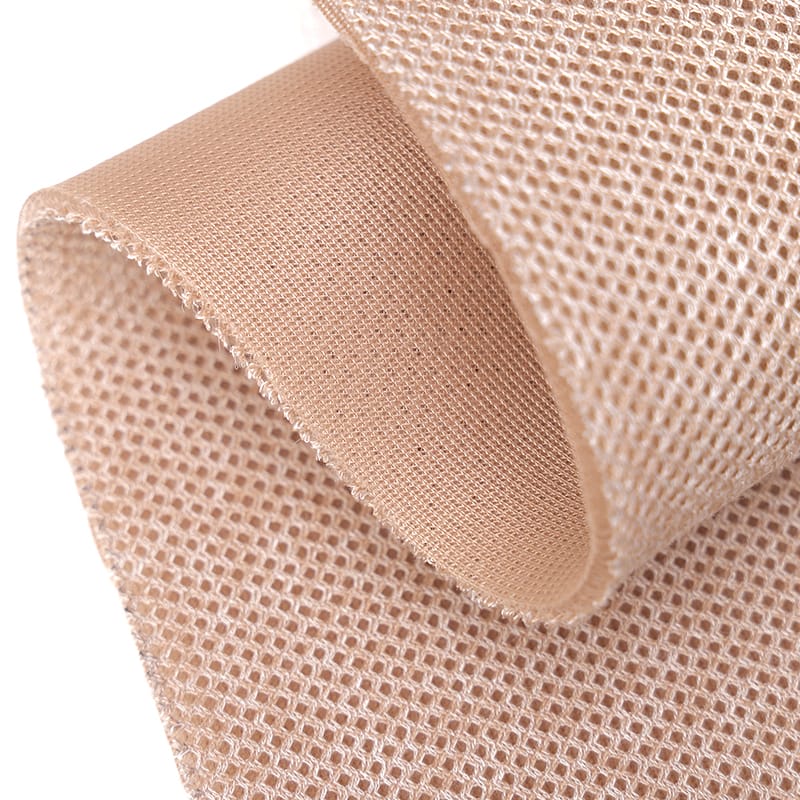
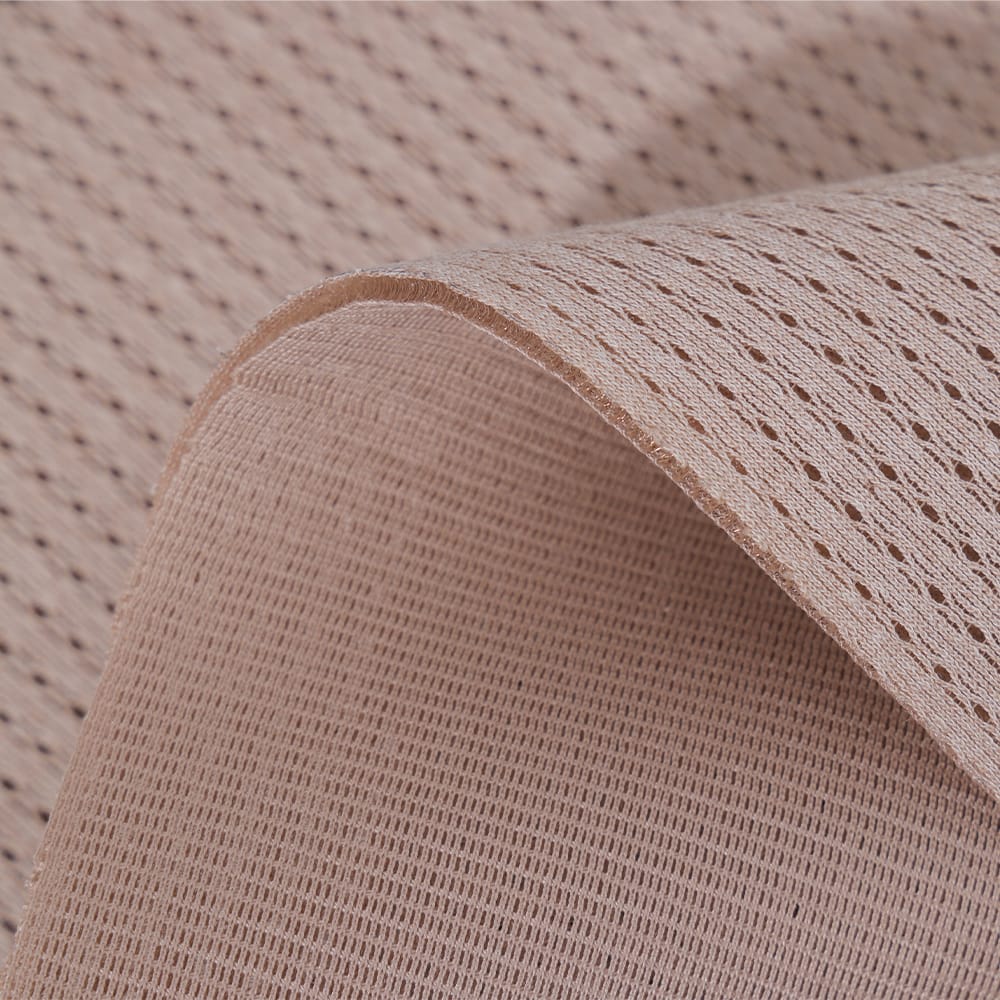
A professional spacer mesh supplier should not only offer different thicknesses. For child car seat cover development, the internal fabric architecture can be tuned in several ways.
Pore shape:Round, diamond, hexagonal, stripe-like, or channel-like openings can create different visual effects, airflow paths, and surface textures.
Pore size:Smaller pores may be preferred for skin-contact areas such as headrest wings or neck zones. Larger openings may be considered for back panels or thigh zones where stronger ventilation is needed.
Open-hole ratio:A higher open-hole ratio can improve airflow, but it may also change support, coverage, appearance, and durability. The right balance depends on the seat area.
Spacer thickness:Thickness affects cushioning, airflow volume, bulk, and sewing compatibility. A thick spacer mesh may work for some comfort zones, while a low-profile structure may be better near harness areas.
Monofilament stiffness:The vertical spacer yarns influence compression recovery and seat feel. Softer monofilaments can improve flexibility, while stronger support yarns may help the fabric recover after repeated pressure.
Pile density:Pile density affects resilience, air channel stability, and long-term shape retention. This is especially important for seat bottom and thigh support areas.
Surface yarn composition:Tencel, polyester, linen-Tencel blends, and other yarn combinations can be selected based on skin touch, moisture management, strength, appearance, and cost targets.
GSM and construction stability:Fabric weight affects handfeel, durability, cutting stability, and price. OEM buyers often need samples at different GSM levels before confirming the final structure.
Lamination and backing:Spacer mesh can be evaluated with foam, nonwoven, lining, or other backing materials depending on cover construction and sewing requirements.
Finishing options:Color matching, softening, washability requirements, flame-retardant testing support, and other finishing choices can be discussed according to the target market.
For ZFY, the goal is not to provide one fixed answer. The goal is to tune the fabric architecture according to each customer’s seat zone requirements.
How Tencel 3D Mesh Fits Skin-Contact Zones
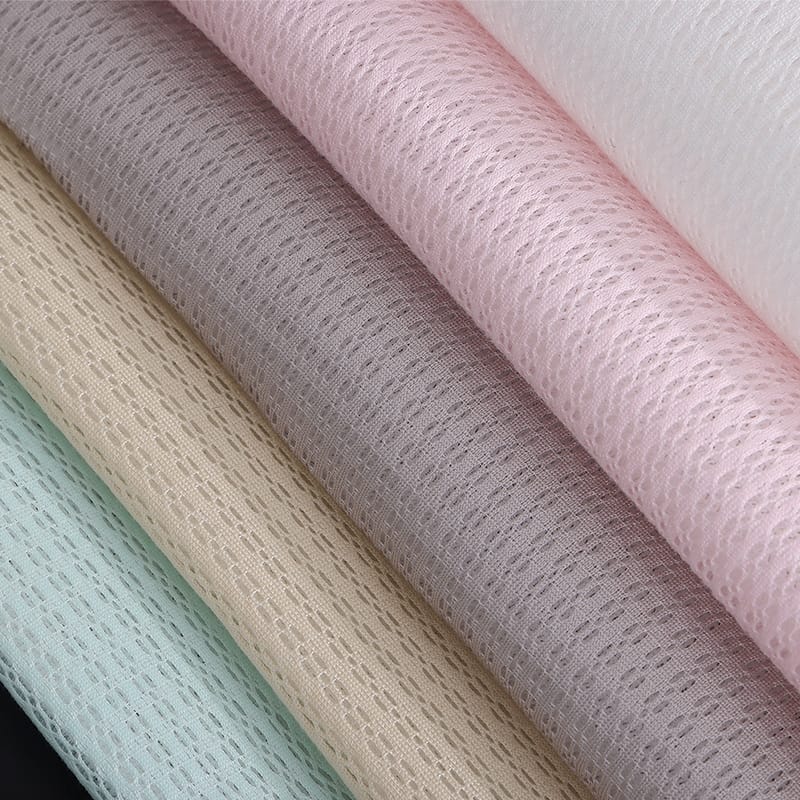
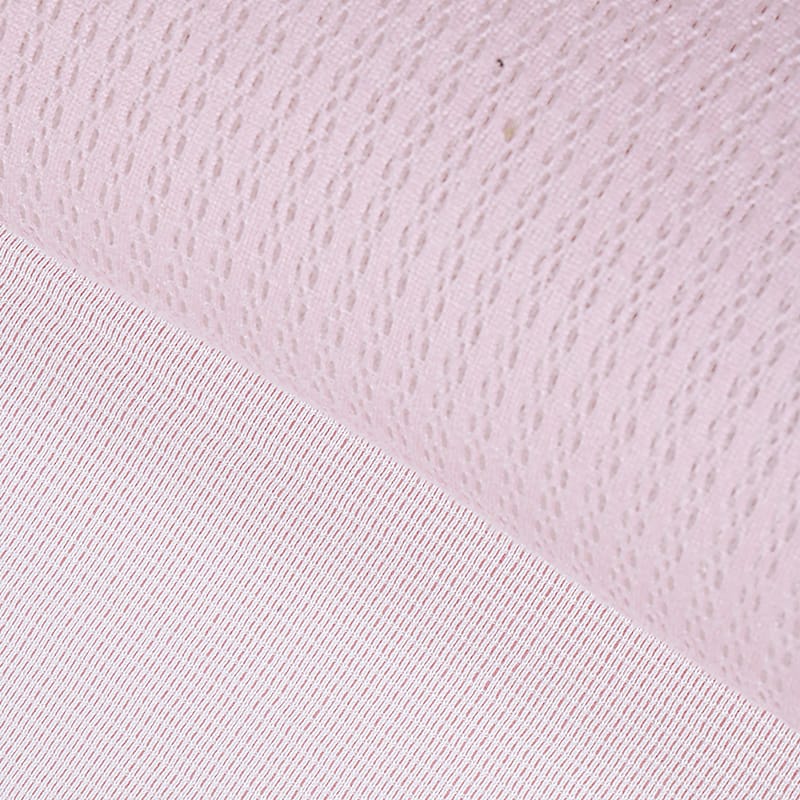
For areas requiring direct interaction with a child’s skin—such as headrests and lumbar supports—Tencel 3D mesh fabric is highly advantageous.
Tencel fibers are renowned for their exceptionally soft handfeel and superior moisture management capabilities, making them ideal for skin-contact comfort. When combined with a polyester spacer structure, the fabric can offer both skin-contact comfort and three-dimensional airflow support.
For OEM projects, this makes Tencel 3D mesh a strong option for zones where the brand wants a more premium, soft-touch, baby-product-oriented material story.
Where Polyester Spacer Mesh May Work Better
Not every child car seat zone needs a Tencel surface. Some areas may require stronger structural recovery, abrasion resistance, or a more robust 3D construction.
For example, the seat bottom center and thigh support zone carry more body weight and repeated movement. In these zones, a polyester spacer mesh with tuned monofilament stiffness, pile density, and thickness retention may be more suitable than a softer Tencel-blend surface.
This is why ZFY recommends material matching by zone. A premium child car seat cover may use different fabrics in different areas: soft Tencel mesh for skin-contact zones, resilient polyester spacer mesh for support zones, and thinner breathable fabrics around harness-sensitive areas.
Testing and Compliance Considerations for OEM Buyers
Fabric should strictly be evaluated in conjunction with the approved seat system.During development, procurement teams must evaluate fabrics against critical metrics: flammability, abrasion resistance, colorfastness, washability, chemical safety, and compression recovery.
For the US market, discussions around FMVSS 213 and FMVSS 302 compliance are mandatory.
For global infant contact materials, OEKO-TEX Standard 100 Product Class I is a critical benchmark for chemical safety.
How ZFY Manufacturer Supports Custom Child Car Seat Fabric Development
ZFY Manufacturer operates as a technical partner to help you build better restraint system covers. Our development process is structured to support OEM and ODM requirements:
- Send Requirements: You provide the seat zones, thickness limitations, target handfeel, target markets, and specific testing requirements.
- Recommend Fabric Structures: We analyze your needs and recommend the appropriate 3D mesh fabric for car seat zones, whether that is a Tencel mesh, high-rebound polyester spacer mesh, linen-Tencel blend, or a localized composite structure.
- Develop Custom Samples: We fine-tune the warp-knitted architecture, adjusting pore size, thickness, GSM, monofilament rigidity, color, and surface yarns to match your vision.
- Support Testing and Bulk Consistency: We supply prototype samples, technical data sheets, testing cooperation, and ensure strict batch-to-batch stability for mass production.
FAQ
Can one breathable fabric be used for the entire child car seat cover?
It depends on the seat design. Some brands may prefer one main cover fabric, while others may use different fabrics by zone. For premium OEM development, a zone-based approach often gives more flexibility because each area has different airflow, support, softness, and thickness requirements.
Is Tencel 3D mesh suitable for direct skin-contact areas?
Tencel 3D mesh can be evaluated for skin-contact comfort zones because it combines a soft surface feel with a breathable spacer structure. Final use depends on the customer’s cover design, testing requirements, and target market standards.
Can ZFY customize pore size and mesh structure?
Yes. ZFY can adjust pore shape, pore size, open-hole ratio, spacer thickness, GSM, monofilament stiffness, pile density, surface yarn, color, lamination, and finishing according to OEM requirements.
Can spacer mesh be laminated with foam or nonwoven layers?
Yes. Depending on the cover construction, spacer mesh can be evaluated with foam, nonwoven, lining, or other backing materials. Lamination should be confirmed together with sewing, comfort, durability, and testing needs.