
1. Starting with Finished Garments: Sleeveless Jerseys & Structural Details
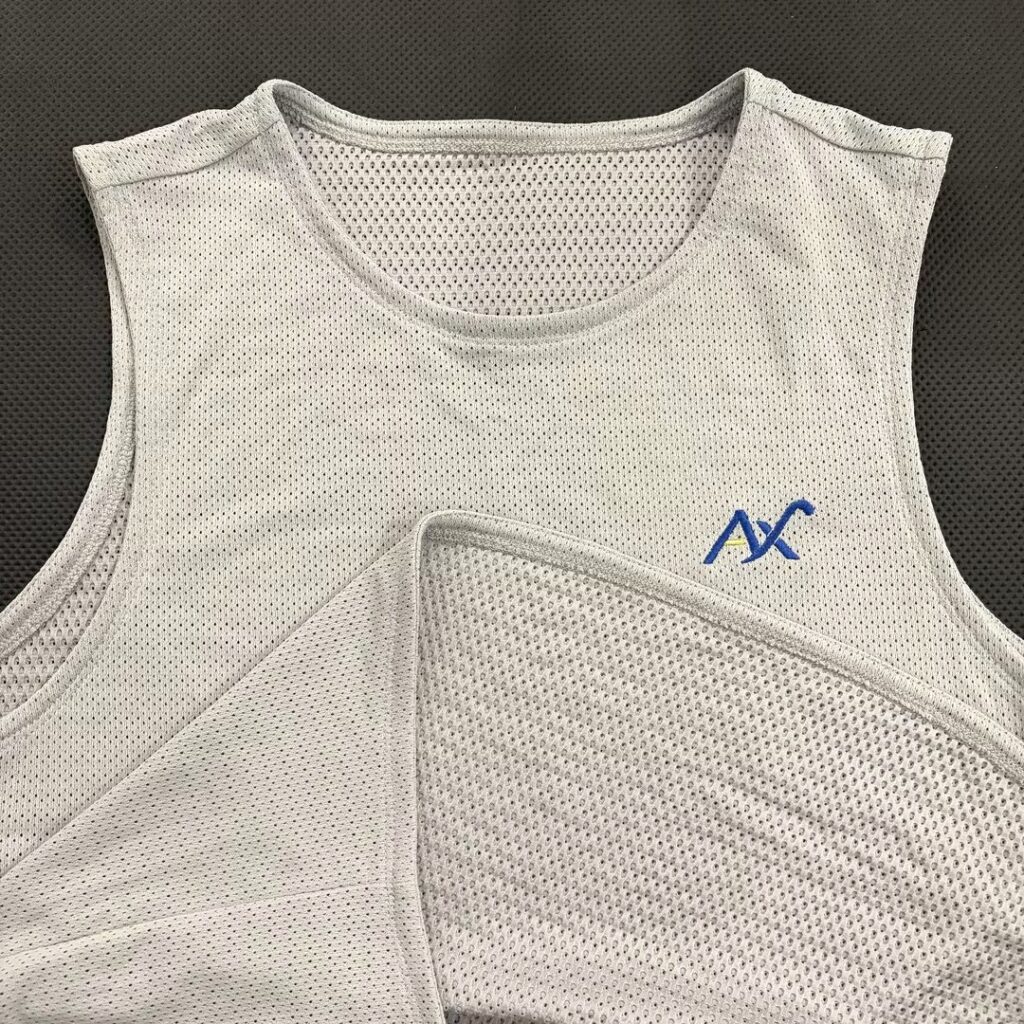
When evaluating functional textiles, nothing speaks louder than a finished, wearable garment. Rather than just looking at flat swatches, we turned our ZFY Polypropylene (PP) Moisture-Wicking Fabric Series into real physical prototypes—specifically, high-performance sleeveless sports jerseys engineered with FZ16-P and FZ22-P.
Examining the actual samples highlights the fabric’s true engineering value:
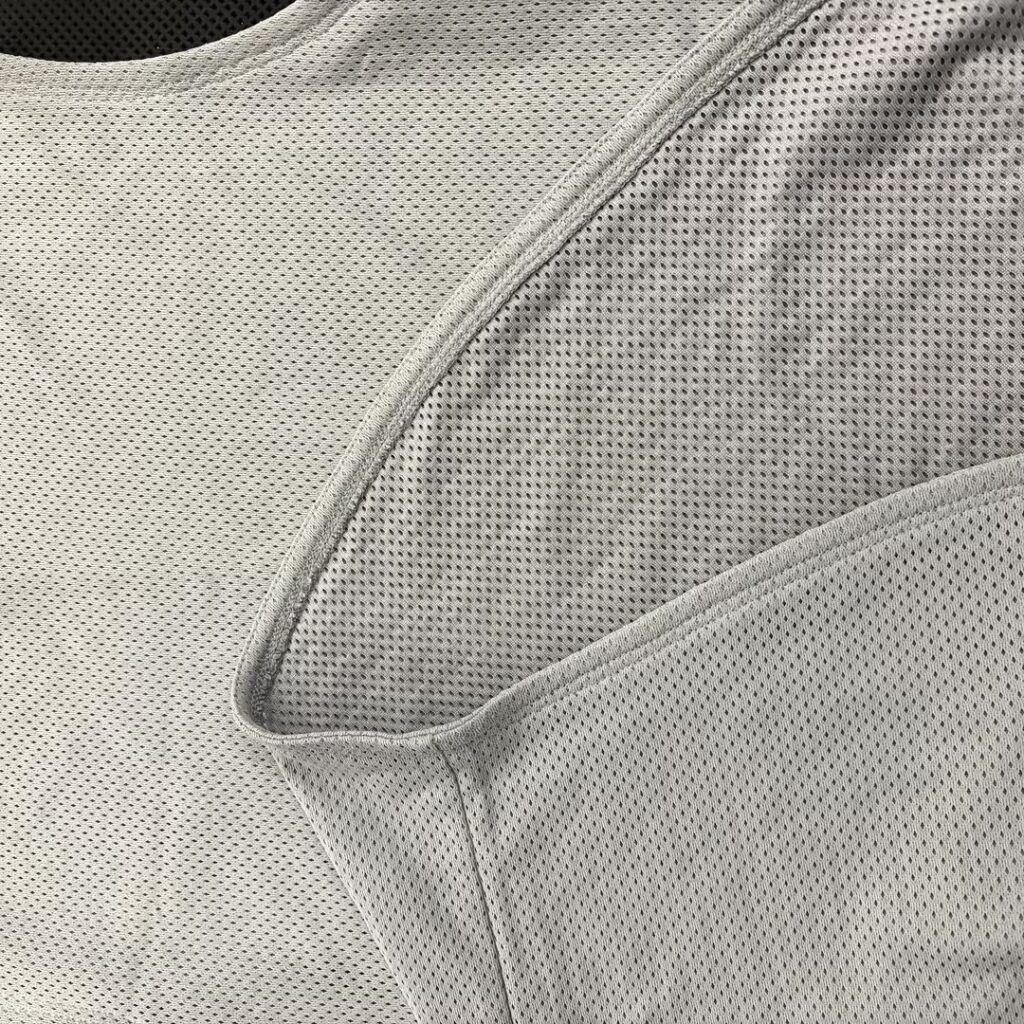
Neckline & Armhole Finishing: The edges drape naturally and bind cleanly without fraying, curling, or adding stiff bulk.
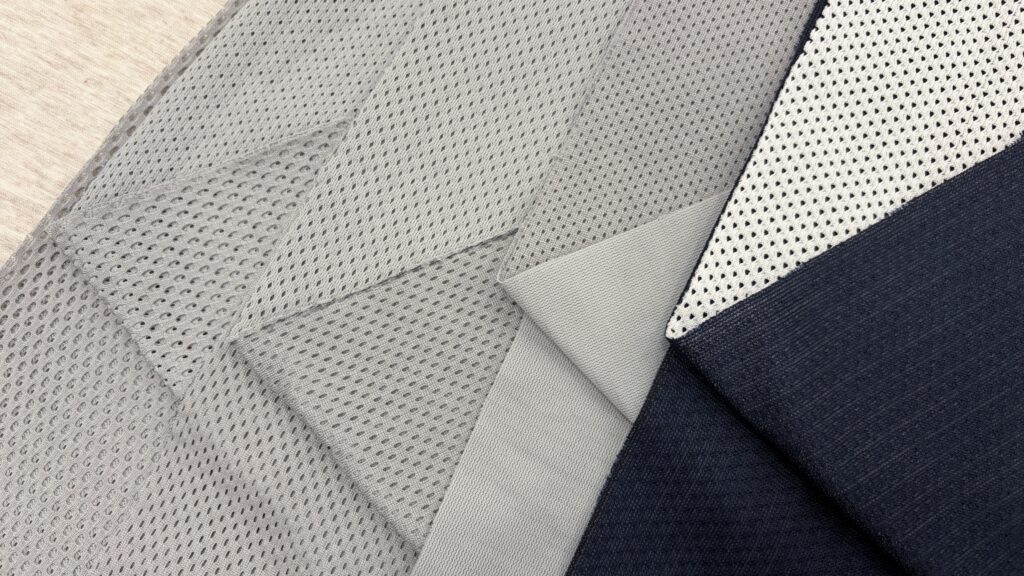
Mesh Structure Close-Ups: Looking closely at the chest and back panels, the distinct open pores allow air to circulate freely while keeping the garment completely floaty and non-stick against the skin, even during heavy perspiration.
2. Buyers Are Truly Choosing: Beyond Weight and Function
In functional textile procurement, buyers routinely ask for technical specs: GSM (weight), composition, wicking speed, and drying rate. While these functional parameters are essential, what clients and designers are truly choosing still comes down to garment aesthetics, mesh texture, and skin sheerness (opacity).
An open mesh may offer top-tier ventilation, but if it is too revealing, mainstream consumers may hesitate to wear it.
Conversely, a dense knit offers complete modesty, but may look too heavy for high-sweat summer workouts.
Balancing functional airflow with wearable skin coverage is the real key to successful garment design.
3. The 3-Tier Selection Guide: Choosing by Airflow and Sheerness
To simplify the decision-making process for brand developers, we recommend following a clear, 3-tier selection hierarchy based on mesh size and modesty:
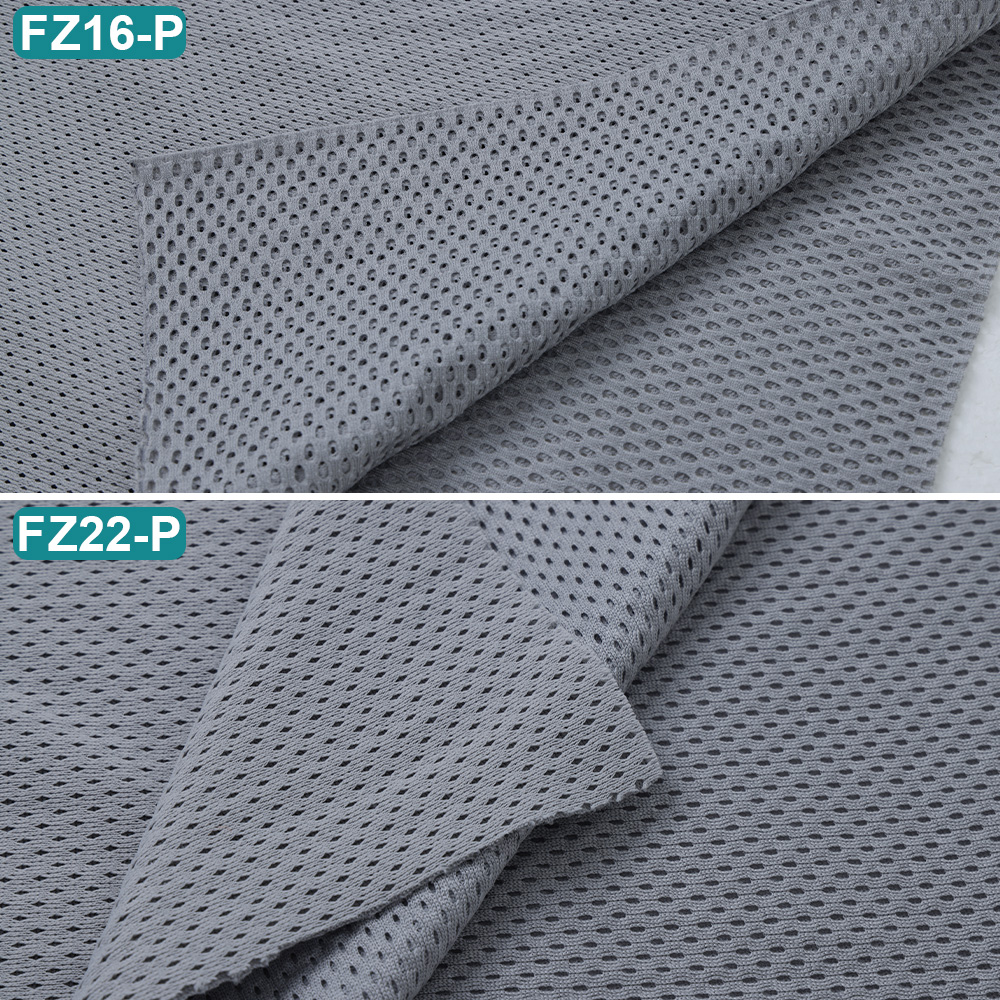
Tier 1 | FZ16-P: Maximum Airflow & Bold Open-Mesh Aesthetics
Base Layer Structure: Open, prominent eyelet mesh knit.
Sheerness / Opacity Level: High transparency (visible skin).
Target Scenario: High-ventilation running singlets, elite basketball jerseys, and zoned back-panel venting.
Why Choose It: If your brand targets competitive athletes, marathon runners, or consumers in tropical climates who prioritize raw thermal dumping and bold athletic style, FZ16-P delivers the most aggressive air circulation available.
Tier 2 | FZ22-P: The "Sweet Spot" Balanced Micro-Mesh
Base Layer Structure: Precision-knitted micro-mesh with fine, subtle pores.
Sheerness / Opacity Level: Low-to-moderate (subtle translucency without overexposure).
Target Scenario: Commercial training tees, club sports jerseys, marathon vests, and lightweight jacket linings.
Why Choose It: If your client or market finds the open holes of FZ16-P too revealing, FZ22-P is the ideal solution. It retains exceptional mechanical moisture venting while providing sufficient visual opacity, making it wearable for mainstream commercial activewear.
Lorem ipsum dolor sit amet, consectetur adipiscing elit. Ut elit tellus, luctus nec ullamcorper mattis, pulvinar dapibus leo.
Tier 3 | FZ20-P: Zero Sheerness with Solid Plain-Knit Coverage
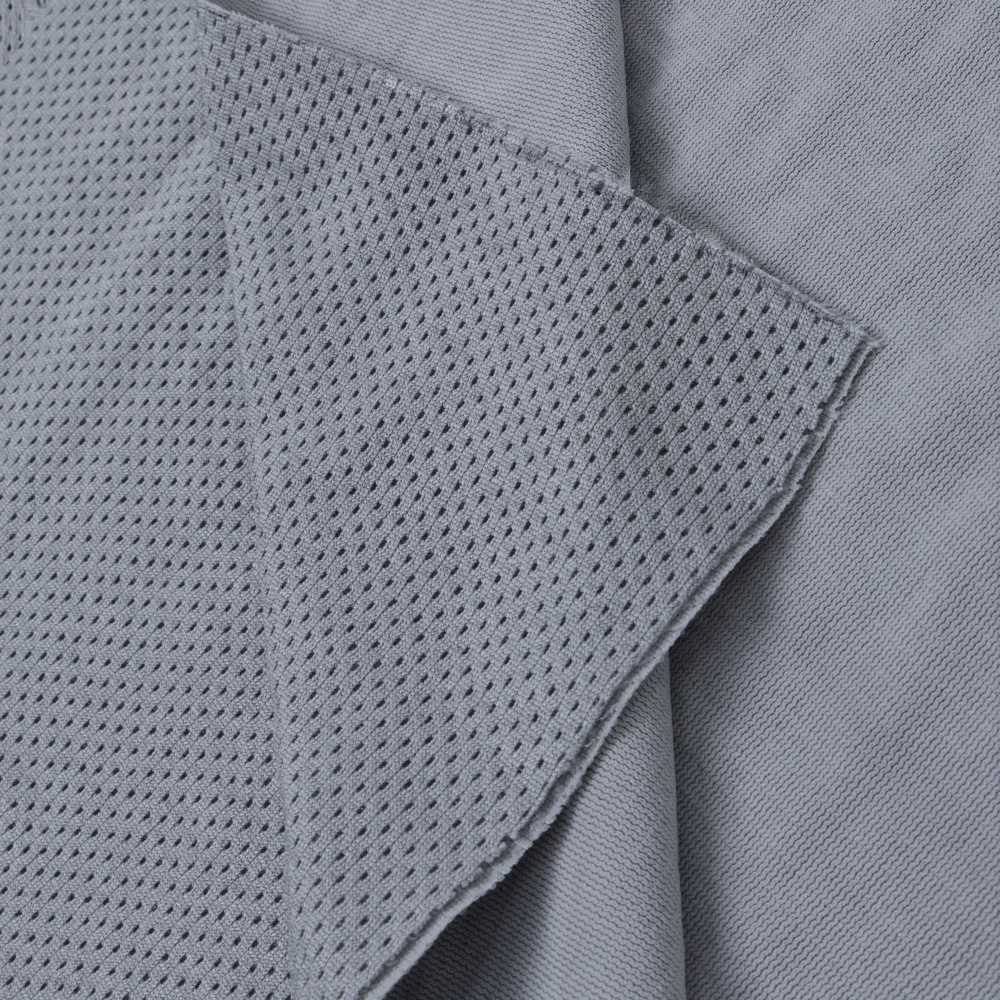
Base Layer Structure: Dense, smooth plain jersey knit without visible eyelets.
Sheerness / Opacity Level: 100% Opaque (zero skin show-through).
Target Scenario: Performance base layers, all-season training tops, and abrasion-resistant linings for outdoor outerwear.
Why Choose It: If a customer requires complete modesty, FZ20-P is the answer. You get the full moisture-wicking and quick-drying benefits of polypropylene in a classic, sleek, solid-knit profile.
4. Fabric Quick-Reference Comparison Matrix
| Fabric Code | Base Layer Construction | Skin Sheerness | Airflow Index | Recommended Garment Styles |
|---|---|---|---|---|
| FZ16-P | Large Open Eyelet Mesh |
(High) |
(Maximum) | Elite basketball jerseys, marathon tanks, ventilated back panels |
| FZ22-P | Fine Micro-Mesh |
(Subtle) |
(High) | Commercial sports tees, club jerseys, technical shell inner linings |
| FZ20-P | Solid Plain Knit |
(Zero / Opaque) |
(Moderate) | Daily training shirts, technical base layers, smooth jacket linings |
5. Differentiating the Two Core Uses: What to Check During Sampling
Depending on how you plan to use this fabric series, your evaluation criteria during sampling will differ:
Application 1: Direct Activewear (Sleeveless Jerseys, Running Tanks, Tops)
What to evaluate during sampling:
On-Body Cling & Drape: Test the sample wet with sweat to verify that the fabric maintains its structure rather than sticking flat against the torso.
Skin Show-Through: Check the jersey under indoor gym lighting and direct sunlight to ensure the chosen sheerness aligns with your brand’s modesty standards.
Friction Points: Verify that edge stitching around the neck and armholes feels soft and chafe-free during high-cadence motion.
Application 2: Outdoor & Techwear Garment Lining (Hard-Shells, Soft-Shells, Windbreakers)
What to evaluate during sampling:
Microclimate Sweat Vapor Transfer: Confirm that the lining rapidly pulls moisture away from the skin and transfers it outward toward the jacket’s shell membrane.
Cold-Barrier Touch: Ensure the lining prevents the clammy, cold, rubbery feel of waterproof PU/PTFE inner coatings from contacting bare arms or necks.
Snag & Abrasion Resistance: Check how smoothly the inner layer glides over base layers and inspect resistance to hook-and-loop fasteners (Velcro) inside the jacket.
6. Start Your Sampling: Share Your Specs about PP Spacer Mesh Fabric
Finding the exact sweet spot between breathability and coverage doesn’t need to be guesswork. To help our engineering team supply the most accurate swatches and prototype references for your project, please let us know:
Intended Garment Use: (e.g., Standalone sleeveless jersey, marathon tank, or 3-season jacket lining)
Desired Sheerness / Opacity Level: (Bold open mesh, subtle micro-mesh, or 100% opaque solid)
Target Color & Aesthetics: (Black, custom lab-dips, or contrasting high-visibility tones)
Fabric Placement: (Full garment body, zoned venting inserts, or interior back panels)
Once we review your parameters, we will dispatch matched swatches of FZ16-P, FZ22-P, and FZ20-P along with physical prototype garment details to accelerate your collection’s development.