
Introduction: From Material Basics to Real-World Application
In the field of rehabilitation and orthopedic support, developing a high-performance brace requires a precise balance between biomechanical support, skin microclimate management, and long-term wearer comfort.
In our previous post, “Beyond Tradition: Exploring 3D Spacer Fabric as a High-Performance Option for Medical Braces and Wheelchair Upholstery“, we examined the foundational advantages of 3D Spacer Fabric over traditional materials. Recently, through in-depth discussions with engineers across the medical device industry, we have compiled five technical questions frequently raised during the product development phase. We hope these insights provide valuable reference for your ongoing projects.
I. Core Technical FAQs: Understanding the Performance of 3D Spacer Fabric
Q1: Regarding Support Stability — How does 3D mesh ensure reliable physical support?
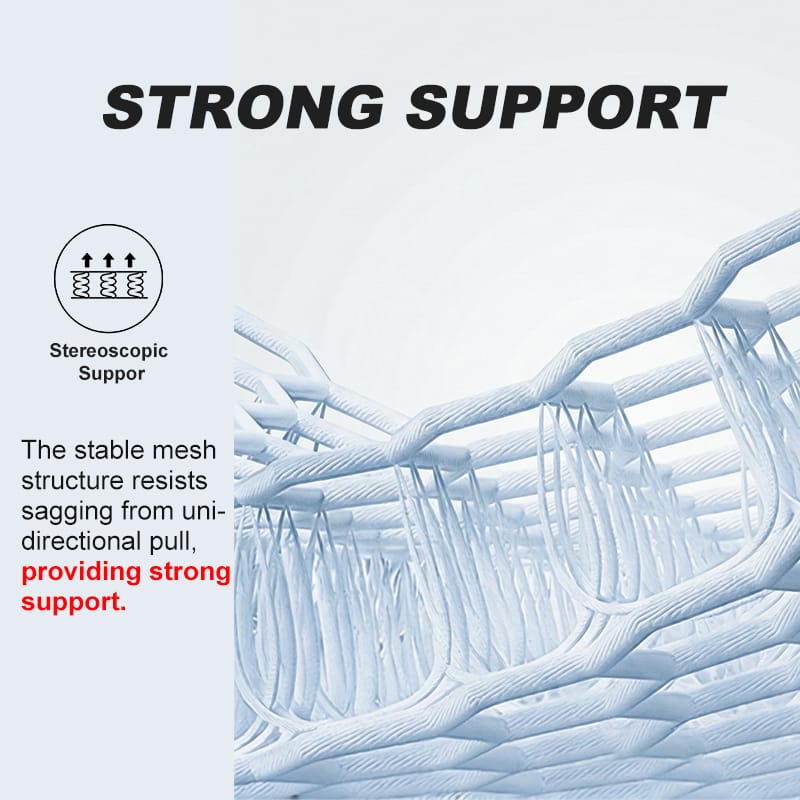
A primary function of any medical brace is to limit abnormal joint movement. The core of 3D Airmesh consists of high-elasticity monofilaments, creating a distinctive X-90° vertical support structure. By adjusting the density and diameter of these monofilaments, the fabric achieves varying levels of compression resistance. This structure effectively redistributes pressure loads, providing gradient support that ensures joint stability without the excessive weight of traditional foams.
Q2: Regarding Microclimate Management — How does it perform during prolonged wear?
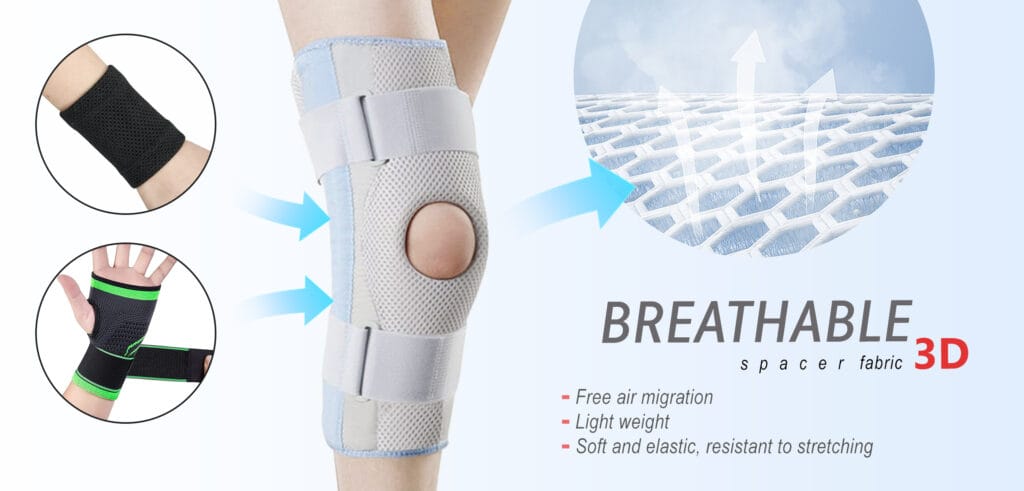
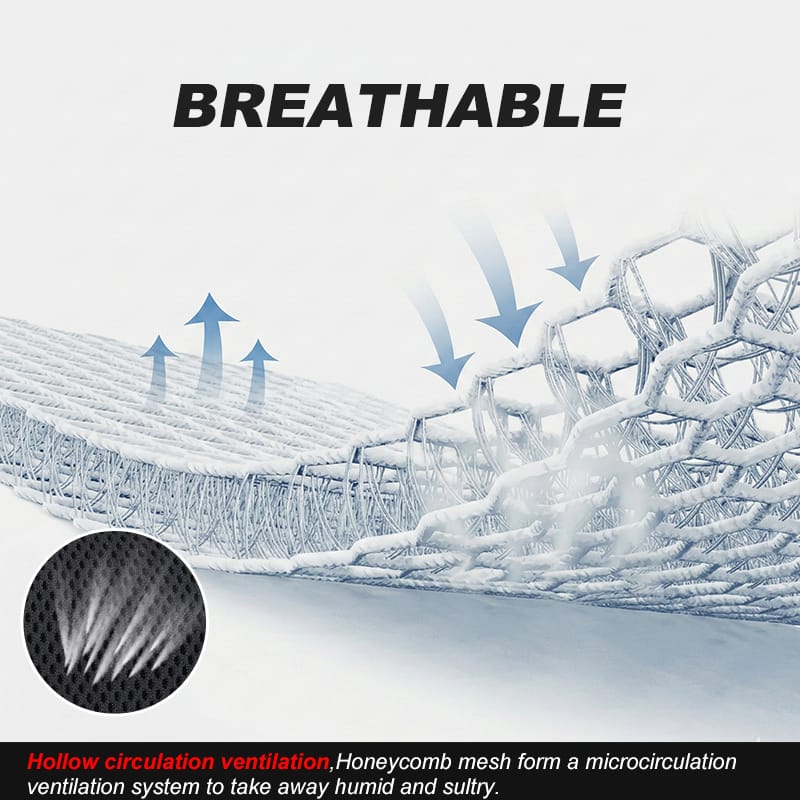
Patient compliance often depends on the temperature and humidity levels within the brace. 3D fabrics utilize a “Pumping Effect”: as the wearer moves and compresses the fabric, stale, moist air is pushed out, and fresh air is drawn in. This active air exchange significantly reduces heat accumulation on the skin surface, managing moisture effectively and minimizing the itching or discomfort often associated with long-term use.
Q3: Regarding Durability & Hygiene — How does the material maintain its shape after high-frequency use?
For medical supports intended for daily use, resistance to Compression Set is critical. High-quality polyester or nylon monofilaments possess excellent physical memory, maintaining a high percentage of their original thickness even after tens of thousands of compression cycles. Furthermore, the open three-dimensional structure allows for rapid drying after washing, inhibiting bacterial growth and odors—essential for medical hygiene standards.
Q4: Regarding Biocompatibility & Compliance — Is the material safe for direct skin contact?
Medical devices are subject to rigorous safety standards for skin-contacting materials. Unlike Neoprene, which often contains chemical foaming agents, 3D Airmesh is manufactured through a purely physical knitting process, free from volatile substances. Our materials are typically designed to meet Oeko-Tex Standard 100 and similar industry regulations, offering a hypoallergenic profile that reduces the risk of skin irritation.
Q5: Regarding Manufacturing & Processing — What should be considered during cutting and stitching?
Due to the inherent thickness of 3D fabrics, R&D teams often focus on processing precision. Thanks to the warp knitting process, the fabric structure is highly stable. During laser cutting, the edges achieve a clean heat-seal, preventing fraying. When stitching, adjusting the stitch length and presser foot pressure ensures a smooth finish even across varying thicknesses, maintaining consistency in the final product.
II. Manufacturing Excellence: Precision via German Karl Mayer Machinery
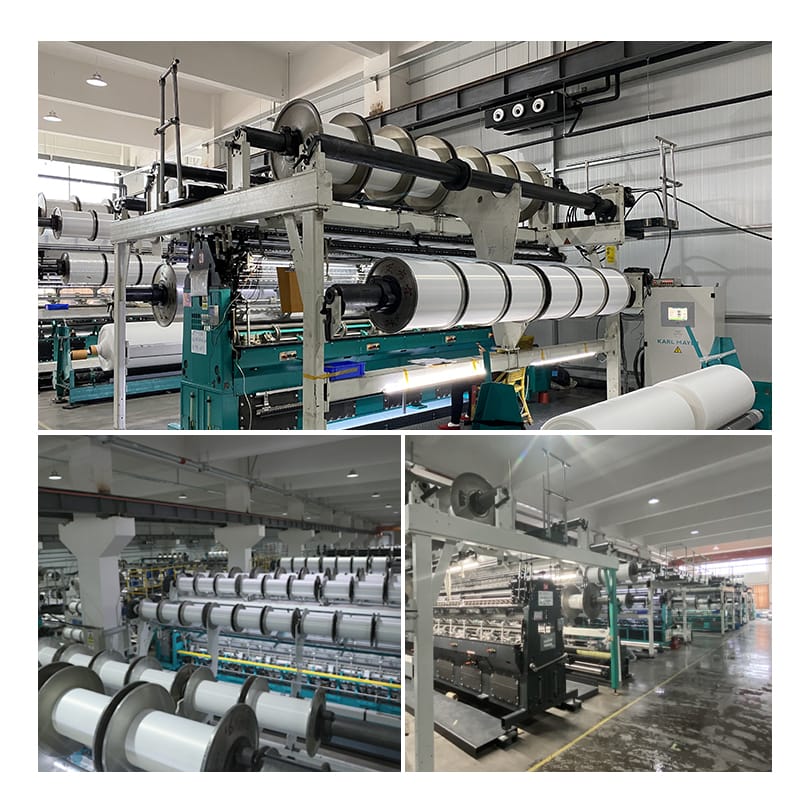
To ensure that these technical parameters remain consistent across mass production, our 3D Airmesh series is manufactured using original German Karl Mayer warp knitting machines.
The advantage of this high-end machinery lies in its extreme tension control, ensuring uniform strength across both the warp and weft. For our partners in the medical sector, this translates to minimal tolerances in thickness, elasticity, and support force—providing a robust foundation.
III. Summary: The Art of Balancing Material Parameters
The success often depends on how well the material aligns with the specific rehabilitation scenario. As noted in our guide on “3D Breathable Mesh in Rehabilitation Equipment“, the multi-dimensional structure of spacer fabrics offers vast possibilities. However, practical success requires fine-tuning parameters based on load requirements, target demographics, and manufacturing budgets.
IV. Reference Solutions
To streamline your initial selection process, we have identified two performance-driven options optimized for different needs:
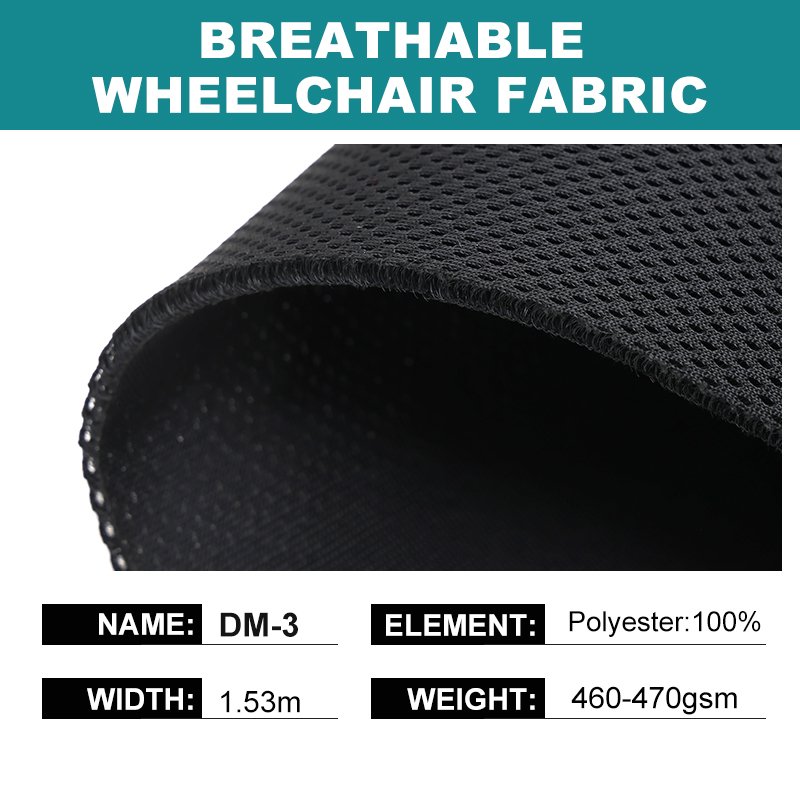
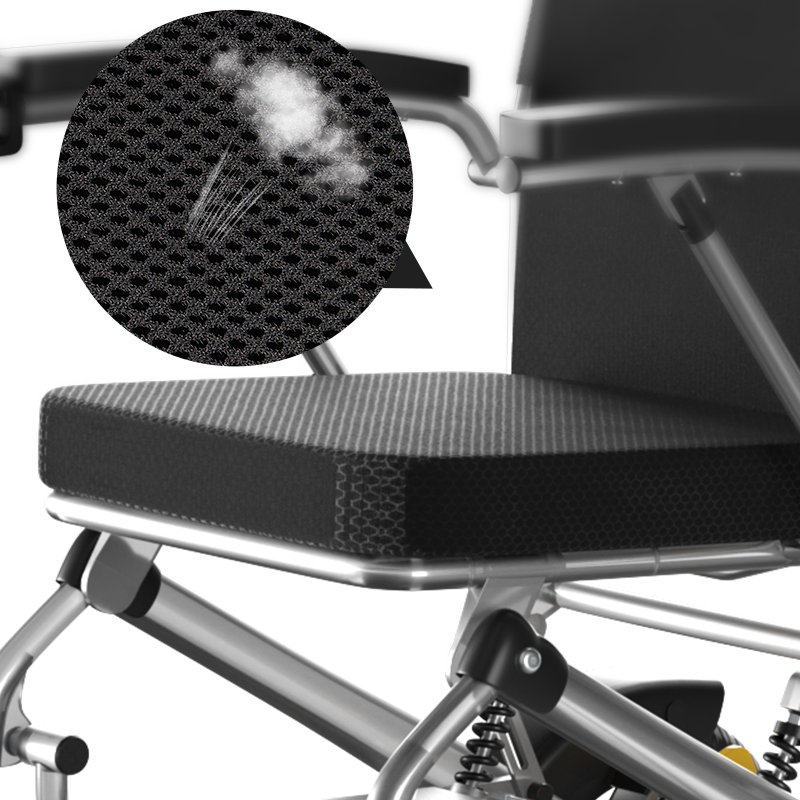
Model DM-3 — The Stable Support Solution:
A 460gsm polyester-based sandwich mesh fabric specifically engineered for healthcare settings. With its high density and reinforced base, DM-3 excels in pressure distribution and dimensional integrity. It is an optimized choice for wheelchair cushions, medical stretchers, and rigid orthopedic supports where stability is paramount.
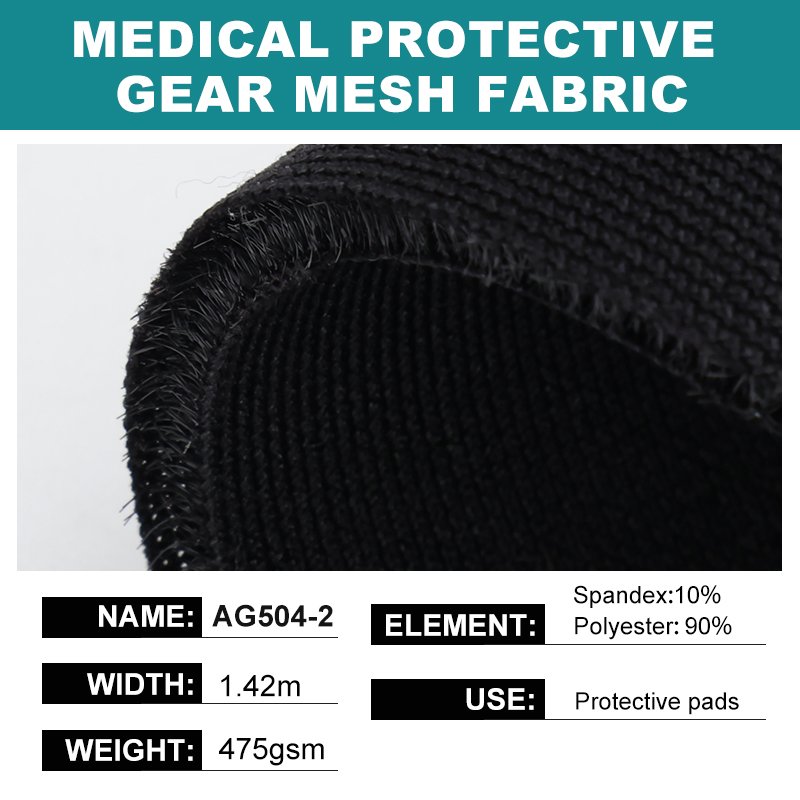
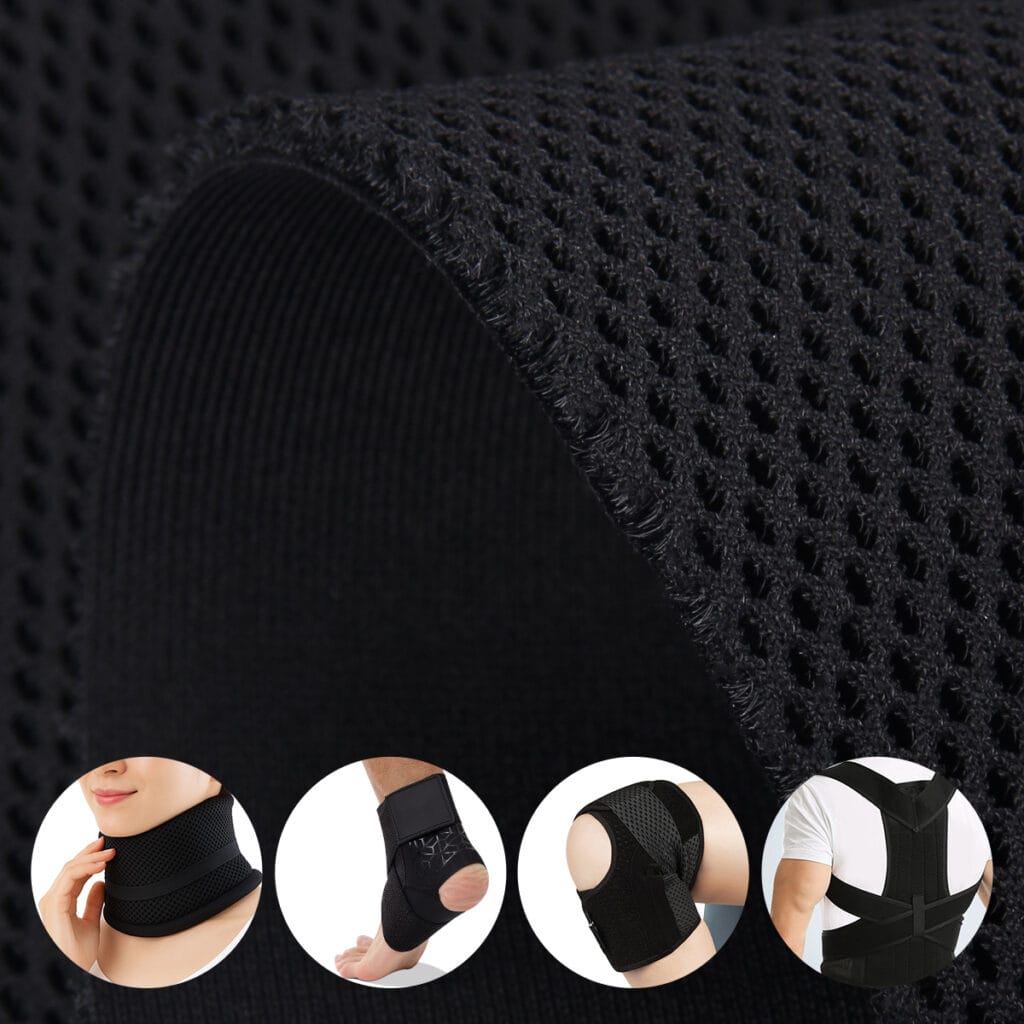
Model AG504-2 — The Elastic Support Expert:
A professional-grade 475gsm fabric comprising 90% Polyester and 10% Spandex. AG504-2 provides a cushioned, elastic hand that delivers controlled compression and shape recovery. It is highly suitable for knee, elbow, and wrist braces, as well as sports protection pads requiring a closer, more flexible fit.
V. Robust Customization Services
We recognize that standard specifications may not meet every cutting-edge R&D requirement. Therefore, we offer comprehensive customization support, including:
Parametric Customization: Adjustments in thickness (3mm to 20mm), firmness, and specific elasticity ratios.
Functional Finishes: Anti-bacterial treatments, moisture-wicking enhancements, or bespoke color development.
Structural Development: Tailored mesh shapes or surface textures designed for specific aesthetic or functional needs.
We aim to be more than a supplier; we strive to be your technical partner, helping transform your product concepts into scalable reality.
Contact Us
If you require technical data sheets for our reference solutions or wish to discuss material applications for a specific project, please contact our technical team. We are pleased to provide sample cards to support your development process.
Please click here for more help.
[Copyright: AirMesh Supply Team – Original Content]
Powered by German Karl Mayer technology, we manufacture premium 3D Spacer Mesh fabrics for limitless applications—from high-performance fashion and footwear to medical, automotive, and home interiors. All textiles are OEKO-TEX Standard 100 certified, ensuring safety, durability, and breathability across all sectors. We support OEM/ODM projects with GRS-certified sustainable options and low MOQ for global partners.