
This guide is regularly updated to reflect the latest innovations in 3D mesh fabrics for apparel, especially the procurement of clothing fabrics in spring.

The Evolution of 3D Mesh: From Industrial Utility to Fashion Staple
The journey of 3D mesh—commonly known as spacer fabric—began in the early 2000s as a high-performance material for industrial padding and luggage. However, a significant shift occurred around 2014, when high-fashion designers began utilizing its architectural volume for avant-garde collections.
This evolution was not accidental. As modern consumers demand a seamless transition between athletic performance and everyday style, designers have found that traditional flat knits often struggle with the humidity and temperature fluctuations of Spring. In the apparel industry, while the silhouette and style always take precedence, high-performance fabric serves as the essential pillar that brings that vision to life. For Spring 2026, the challenge for sourcing is to select materials that honor the designer’s aesthetic while ensuring consistent performance during mass production.
Core Value: Why 3D Mesh Fabrics for Apparel Improves Spring Comfort
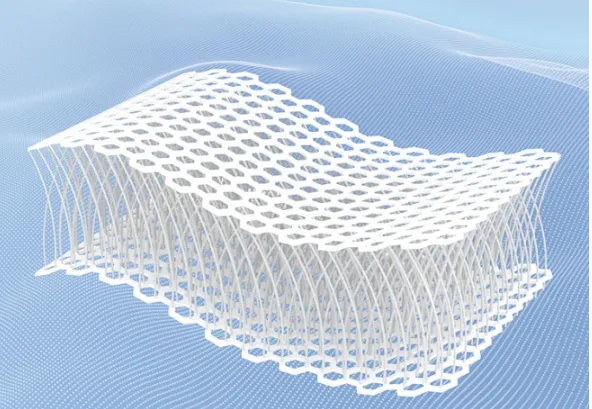
The inherent structure of 3D mesh offers two critical advantages for the Spring season:
Micro-climate Regulation: The unique X-90 vertical support structure creates a permanent air chamber. This layer acts as a natural buffer, retaining body heat during cool mornings and accelerating heat dissipation as temperatures rise.
Lightweight Structural Integrity: 3D mesh allows designers to create “air-filled” silhouettes. It provides the necessary “bone” to a garment without the added weight of traditional heavy fleece or bonded fabrics, perfectly aligning with the Spring 2026 trend for lightweight, structured outerwear.
Technical Execution: Reducing the Gap Between Design Drafts and Finished Products
To ensure that the final product retains the quality of the initial prototype, sourcing must focus on technical stability. Our curated selection for Spring 2026 addresses specific production pain points:
1. Visual Depth and Texture Consistency — V400 Cationic Series
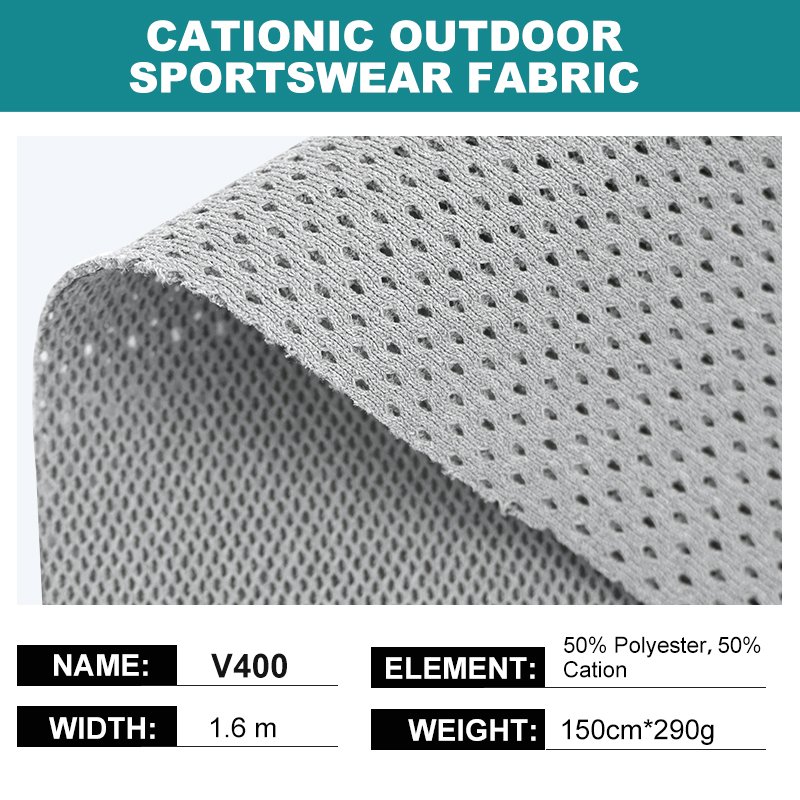
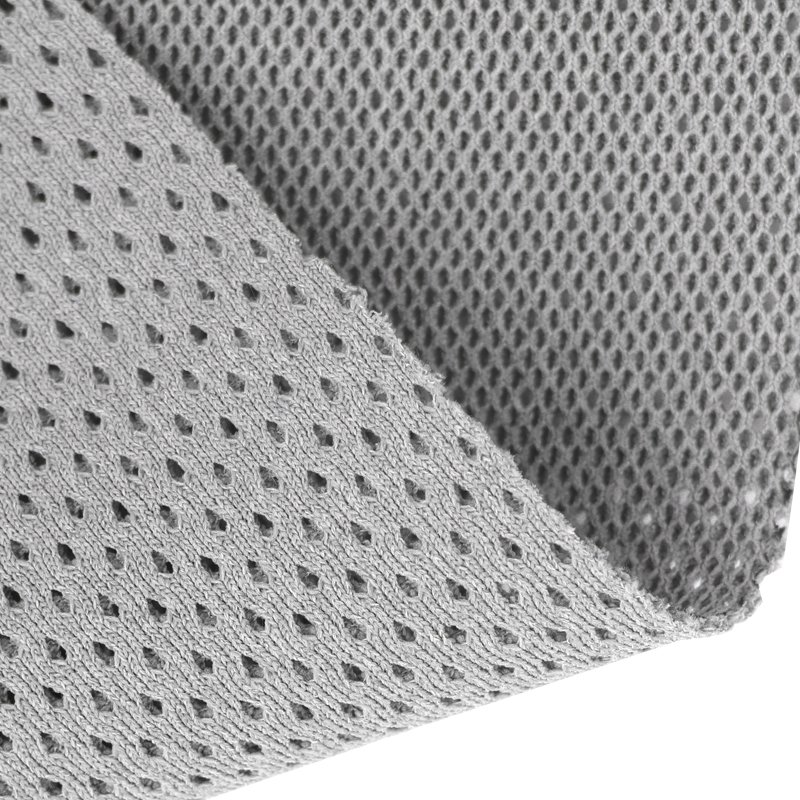
The Challenge: Standard polyester often exhibits a cheap, plastic-like sheen under Spring sunlight, and batch-to-batch color variance can undermine a brand’s premium positioning.
The Solution: Our V400 series utilizes cationic-modified fibers woven on high-precision Karl Mayer machines. This can produce a sophisticated, matte two-tone effect if you need. The precision of Karl Mayer technology ensures that the loop structure is perfectly uniform, guaranteeing color depth and texture consistency across large-scale orders.
2. Texture Durability and Tactile Comfort — Q001 Performance Waffle

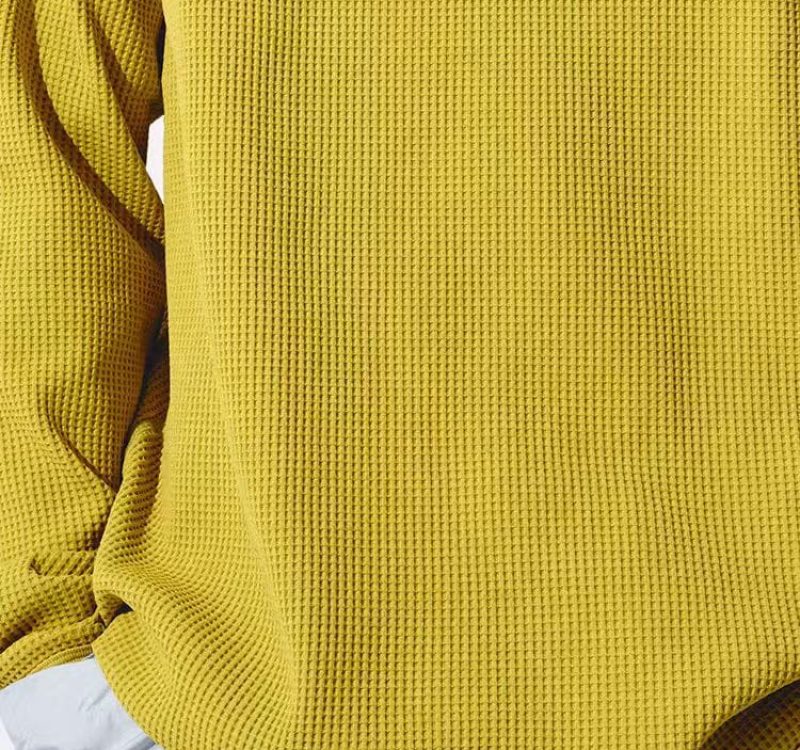
The Challenge: Traditional waffle textures often collapse after repeated washing or steaming, causing the garment to lose its shape and stick to the skin.
The Solution: Q001 locks its 3D geometric grid through physical weaving, not chemical embossing. The stable structure provided by Karl Mayer engineering ensures excellent compression recovery, maintaining the “dry-touch” feel even during high humidity.
3. Micro-climate Control & Dynamic Stretch — New Fabrics A & B


8011-D (Ultralight 3D Mesh): Designed for “skin-feel” shirts or ergonomic paneling. Its advantage lies in maintaining airflow despite its ultra-thin gauge. This physical barrier prevents the fabric from clinging to the skin during perspiration, ensuring all-day freshness.
FZ02 (High-Stretch/Compression 3D Mesh): Engineered for yoga and high-intensity training. This fabric maintains total opacity (non-see-through) even under high elongation, while its superior recovery prevents bagging at the knees or elbows, providing muscle support without compromising on style.
Material Comparison: 3D Mesh vs. Traditional Apparel Fabrics
| Traditional Single Jersey / Terry | Airmesh Supply 3D Mesh | |
| Air Circulation | Limited (relies on fiber absorption) | Excellent (physical air channels) |
| Shape Retention | Prone to shrinking and wrinkling | High dimensional stability; wrinkle-resistant |
| Weight-to-Thickness Ratio | High (heavier when thick) | Low (achieves volume without weight) |
| Drying Speed | Slow (prone to moisture odor) | Rapid (reduces bacterial growth) |
The Foundations of Mid-to-High Market Sourcing
Full GRS Certification: In 2026, sustainability is no longer an option but a market entry requirement. Our Global Recycled Standard (GRS) certification ensures supply chain transparency and compliance, protecting your brand from regulatory risks in the EU and US markets.
The Karl Mayer Benchmark: Manufacturing on German Karl Mayer machines is our guarantee of quality. It translates to higher pilling resistance and superior dimensional stability—the technical “insurance policy” that reduces consumer returns and after-sales complaints.
Customization: Translating Concepts into Reality
We offer flexible bespoke services to meet unique brand DNA:
Specification Tuning: Adjusting mesh geometry, weight (GSM), and hand-feel to match specific garment silhouettes.
Color Development: Precise lab-dip matching for seasonal palettes.
Our Commitment: Leveraging the versatility of Karl Mayer technology and our deep engineering expertise, we assist clients in optimizing their designs for technical feasibility without sacrificing the original creative vision.
Fabric Technical Validation: The Sourcing Checklist
Before committing to bulk production, we recommend verifying these Key Performance Indicators (KPIs) to ensure the fabric supports your design’s integrity:
Bursting Strength: Crucial for ensuring that 3D structures do not delaminate or burst at high-stress seams.
Dimensional Stability (Shrinkage): Controlled within strict tolerances to maintain the garment’s original fit after home laundering.
Pilling Resistance: Must achieve Grade 4 or higher to meet the standards of the premium activewear market.
Compliance Documentation: Verification of valid GRS Transaction Certificates (TC) for every shipment.
Conclusion: Fabrics That Honor the Art of Style
In the apparel world, style is the first point of attraction for the consumer. However, exceptional fabric is the soul that sustains that attraction. A high-performance 3D mesh ensures that a designer’s silhouette remains intact and the wearer experiences comfort that exceeds expectations.
Next Steps for Your Spring 2026 Collection:
Contact us for the latest Price List and Technical Data Sheets (TDS) .
Request our Spring 2026 Physical Sample Kit to experience the Karl Mayer difference firsthand.