
The Hidden Burden of Recovery
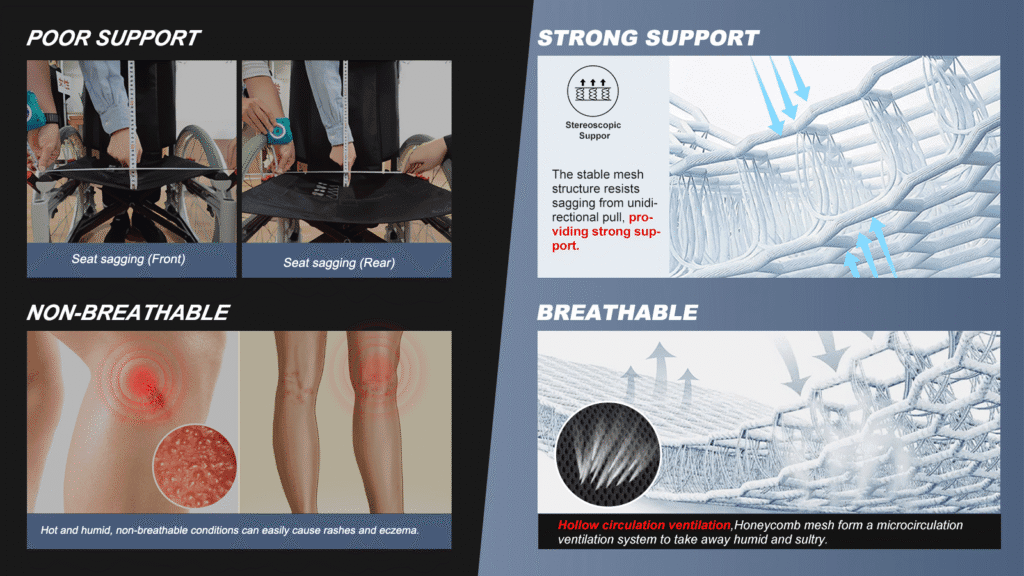
Consider the experience of a patient—let’s call him Mr. Zhang—recovering from knee surgery. To protect his ligaments, he must wear a supportive brace 24/7. However, the heat and moisture trapped by traditional materials soon lead to skin irritation. Similarly, wheelchair users like Mrs. Wang often face a different challenge: the backrests and seats of traditional wheelchairs are often made of non-breathable synthetic fabrics. After hours of use, the accumulated heat against her back becomes more than just a discomfort—it’s a barrier to daily mobility.
In the world of medical rehabilitation, the balance between structural integrity and dermal comfort is paramount. We are constantly asking: Can the fabric of a wheelchair or a brace provide reliable support while allowing the body to breathe?
Industry Insight: Why Traditional Wheelchair Fabrics Fall Short
To understand the shift toward innovative textiles, we must look at how 3D spacer fabric compares to traditional materials currently used for medical gear and wheelchair upholstery.
| Material Type | Support & Tension | Breathability | Skin Comfort | Common Limitations |
| Traditional Nylon/Vinyl | High | Extremely Low | Poor | Traps heat and moisture; can cause skin maceration over long periods. |
| Neoprene (for Braces) | Excellent | Low | Moderate | Prone to causing “sweat rashes” during extended wear. |
| PU Foam/Padding | Moderate | Very Low | Moderate | Prone to “bottoming out” and losing shape; difficult to sanitize. |
| 3D Spacer Fabric | Stable & Resilient | Exceptional | High | Requires precision manufacturing and specialized edge finishing. |
While traditional fabrics are durable, 3D Spacer Fabric is emerging as a high-performance alternative that addresses the critical need for microclimate management on the seating surface and backrest.
Architecture of Support: Understanding the 3D Structure
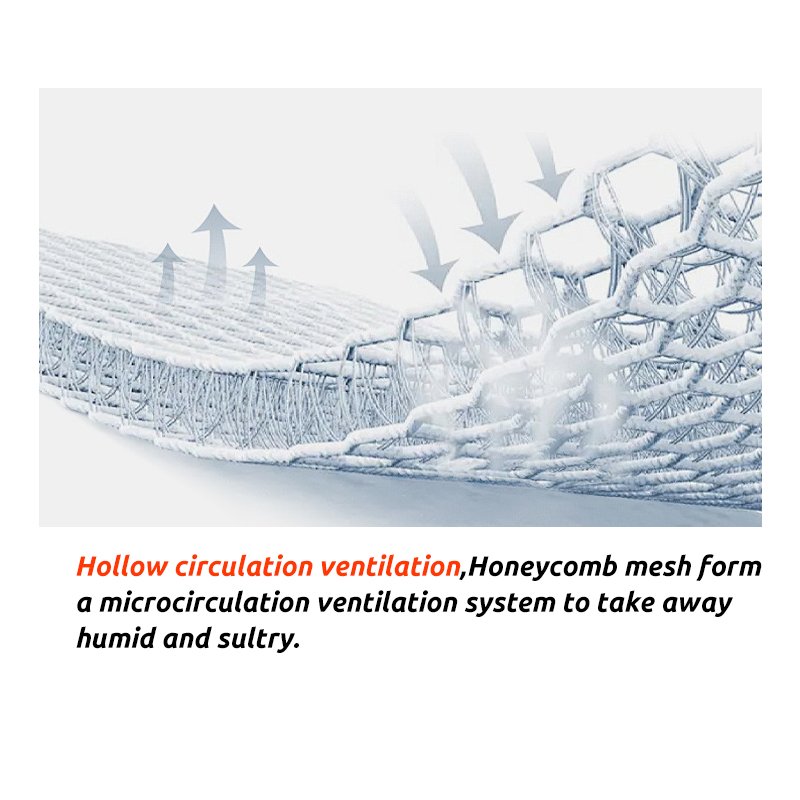
3D Spacer Fabric is not merely a textile; it is a micro-engineered environment. Often referred to as a “sandwich” structure, it consists of three distinct layers:
The Dual Surface Layers: Designed with open mesh pores, these layers allow for the immediate exchange of heat and air between the user and the environment.
The X-90° Monofilament Layer: Thousands of polyester monofilaments act as “micro-springs” providing vertical support and maintaining the air gap even under the weight of a user.
Physical Benefit: This architecture creates a permanent air chamber. Under the natural movements of a wheelchair user, the fabric facilitates a “micro-pumping” effect, significantly aiding in the removal of moisture and excess heat.
Precision Manufacturing: The Karl Mayer Advantage
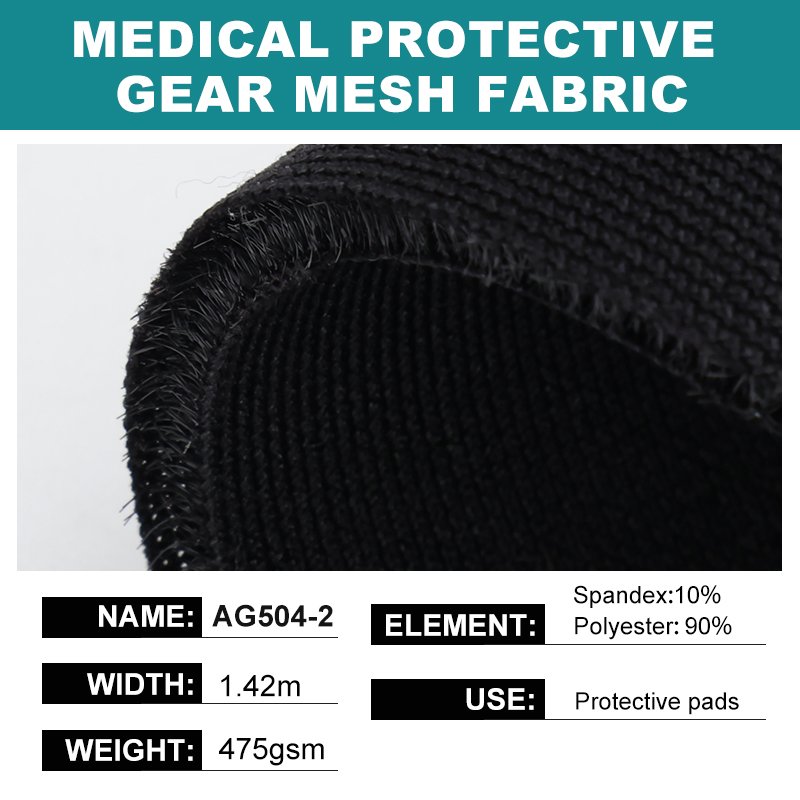
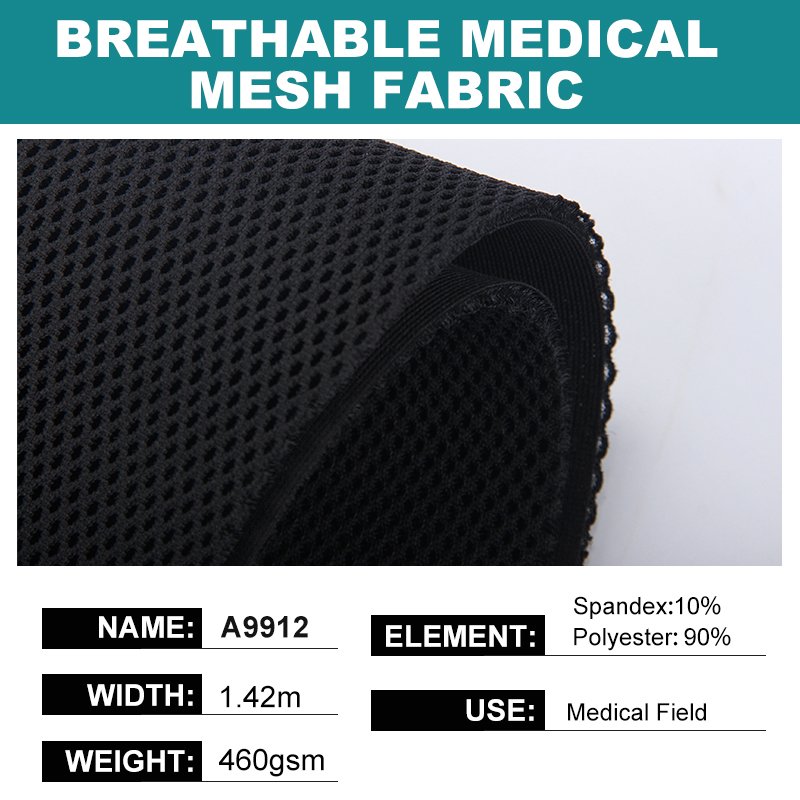
The reliability of a medical-grade fabric, especially when used as the primary seat or backrest of a wheelchair, depends on its structural consistency. Our AG504-2 and A9912 series are produced using German Karl Mayer warp knitting machines.
Tension Stability: German engineering ensures that the monofilament density is uniform. For wheelchair upholstery, this means the fabric provides consistent tension and support across the entire backrest, reducing the risk of sagging over time.
Durability Under Load: Fabrics woven on Karl Mayer machines exhibit superior fatigue resistance, maintaining their rebound properties even after prolonged weight-bearing use.
Material Science: The Role of 10% Spandex
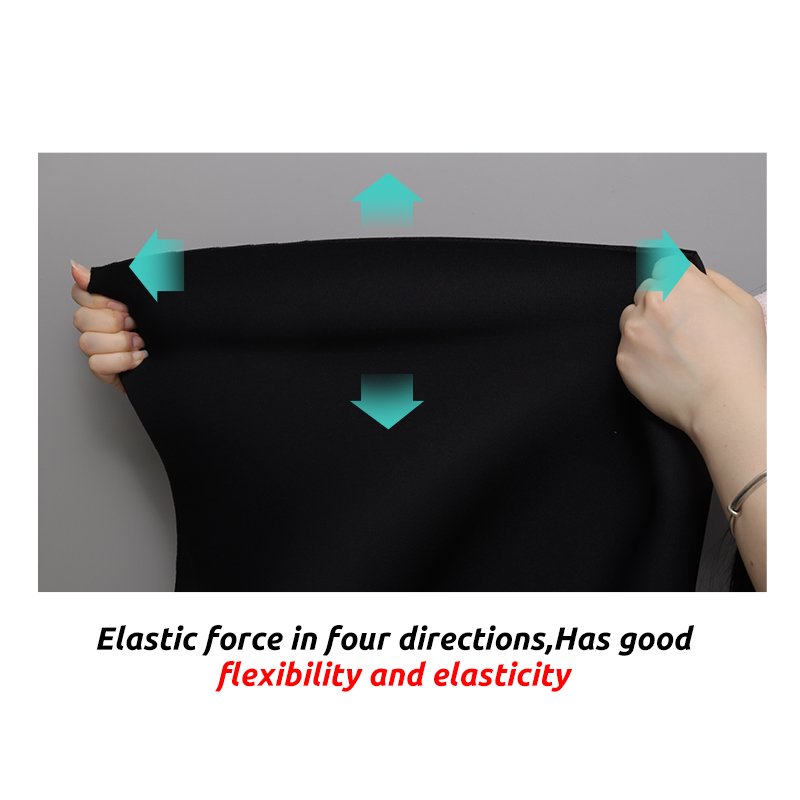
In the development of AG504-2 and A9912, we utilize a precise blend of 90% Polyester and 10% Spandex.
Reduced Pressure Points: The 10% Spandex provides multi-directional stretch, which helps alleviate the harsh, rigid creases often found in 100% polyester materials.
Anatomical Conformance: This elasticity allows the wheelchair backrest or knee brace to conform more naturally to the user’s body, minimizing friction against sensitive skin during movement or repositioning.
Design Guidance: Maximizing Material Performance
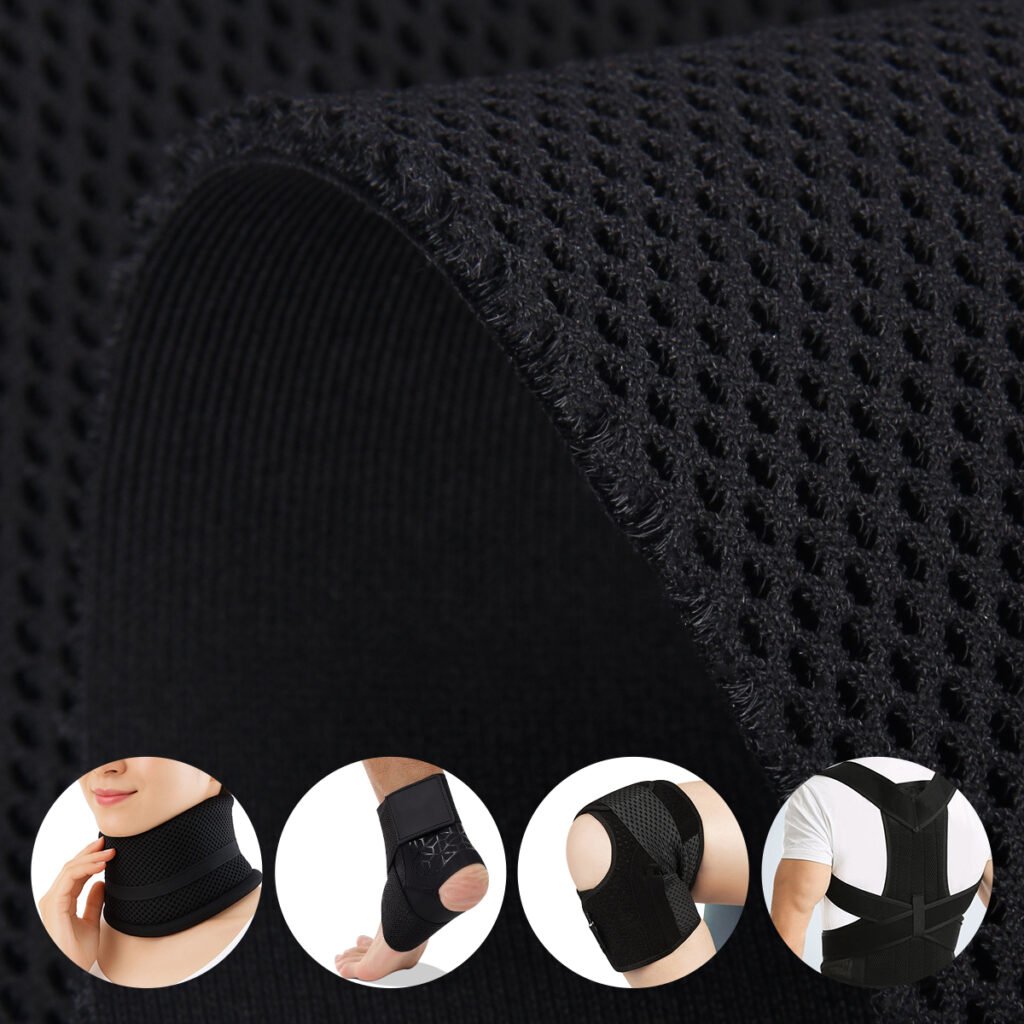
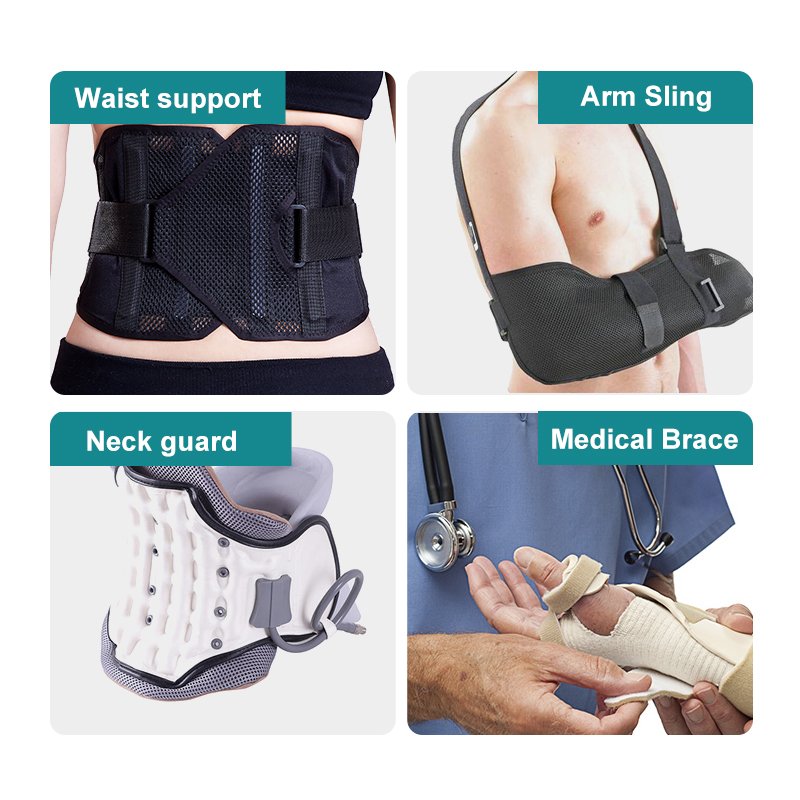
To ensure your finished product stands out in the market, our technical team suggests the following considerations:
Velcro Compatibility: For braces, we recommend using medical-grade micro-hooks (injection hooks) to prevent snagging the mesh surface.
Structural Integrity for Wheelchairs: When using these fabrics as primary upholstery, ensure proper frame tensioning. A five-thread overlock stitch is recommended for seams to ensure the monofilament layers are securely encapsulated.
Strategic Layering: For heavy-duty wheelchair seating, AG504-2 can be used as the primary load-bearing fabric, while A9912 can serve as a highly breathable backrest component.
Selecting the Right Grade: A9912 vs. AG504-2
A9912 (460gsm): Features a more open mesh for maximum airflow. It is highly recommended for active-recovery knee braces and lightweight wheelchair backrests.
AG504-2 (475gsm): Offers higher density and superior vertical compression resistance. This is the ideal choice for heavy-duty wheelchair seating surfaces and rigid orthopedic stabilizers.
Conclusion: Technology with a Human Touch
Returning to Mr. Zhang and Mrs. Wang, the process of recovery or daily mobility should not be defined by physical discomfort. For the user, technical parameters like GSM or machine brands are abstract; what matters is the cooling sensation against their back and the feeling of stable, reliable support.
Through the precision of German-engineered 3D spacer fabrics, we aim to significantly alleviate the itching and overheating common in traditional medical gear and wheelchair upholstery. Choosing high-performance materials is more than a product upgrade—it is an empathetic response to the real-world needs of users. We look forward to bringing this “breathable” innovation to your next project, helping users move with greater ease and dignity.
Elevate Your Product Development
If you are developing the next generation of medical braces or high-end wheelchair upholstery, our team is ready to support you.
Request Sample Swatches: Obtain physical samples of AG504-2 and A9912 for your evaluation.
Technical Consultation: Access professional advice on material performance and application techniques.
Contact Us Today.
Connect with our specialist team through our [Contact Page Link]. We are committed to responding to your inquiries within 24 hours.