
When product teams talk about mountain hardwear air mesh, they usually mean one thing: a fabric that feels warm enough for shoulder seasons, yet breathes like a mesh and dries fast after every climb, run or hike. Many designers specifically reference the comfort and versatility of a mountain hardwear air mesh hoodie when they brief new performance layers.
As more outdoor brands move away from heavy fleece to smarter, engineered knits, air mesh constructions are becoming a go-to choice for mid-layers, base layers and even lightweight outer shells. Our F300-M air mesh fabric is developed with exactly this demand in mind. With a weight of 100gsm and a width of 150cm, it offers a lightweight, breathable and stable platform for next-generation outdoor apparel.
In this article, we will show how F300-M can work as a mountain hardwear air mesh style solution for brands that need reliable bulk supply, custom colors and consistent performance.
What Makes Mountain Hardwear AirMesh So Popular?
Before looking at F300-M, it helps to understand why the original mountain hardwear air mesh fabric has such a strong reputation in the outdoor market.
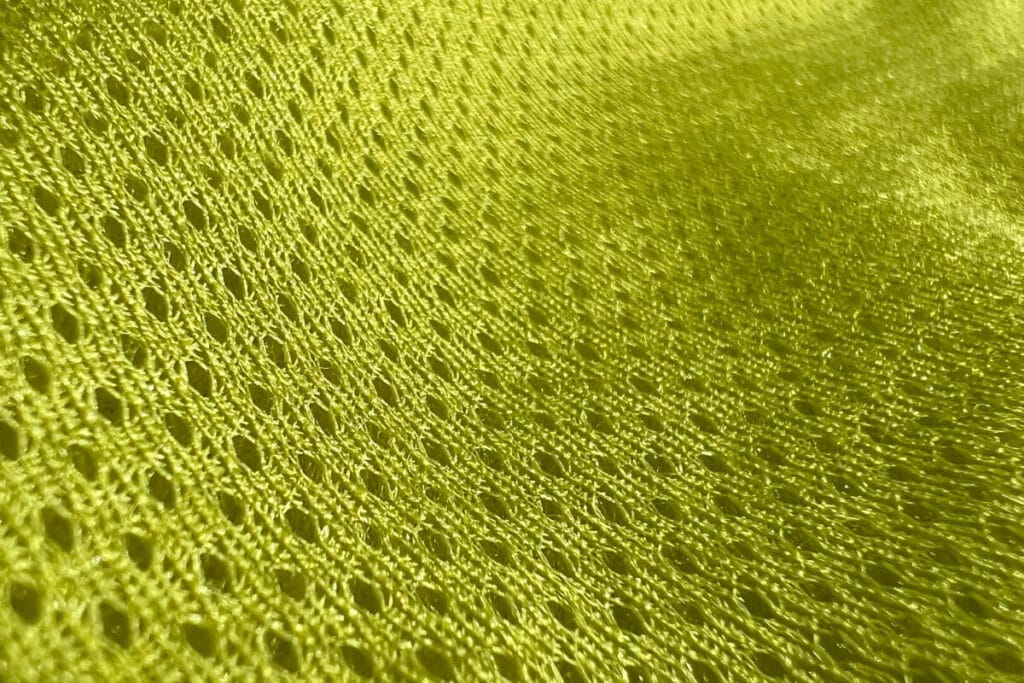
The Mountain Hardwear AirMesh Hoody is built around a special Octa®-type fiber. This yarn has a hollow core and shaped, ridged geometry, so the knit structure naturally forms tiny pockets of trapped air. These microscopic “dead air” zones help boost insulation without adding weight or bulk.
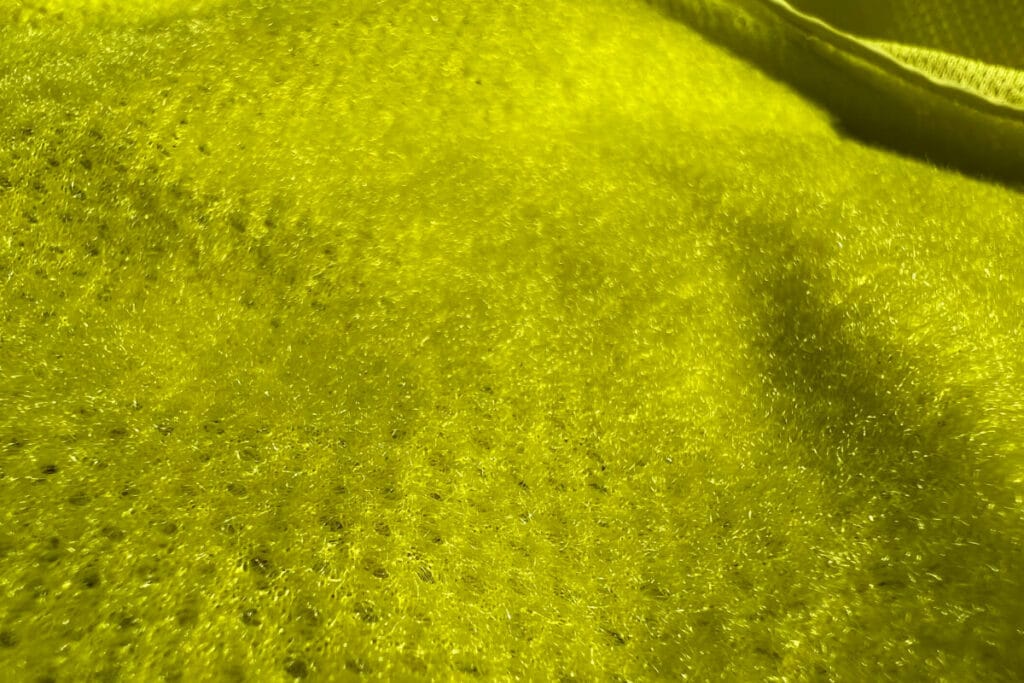
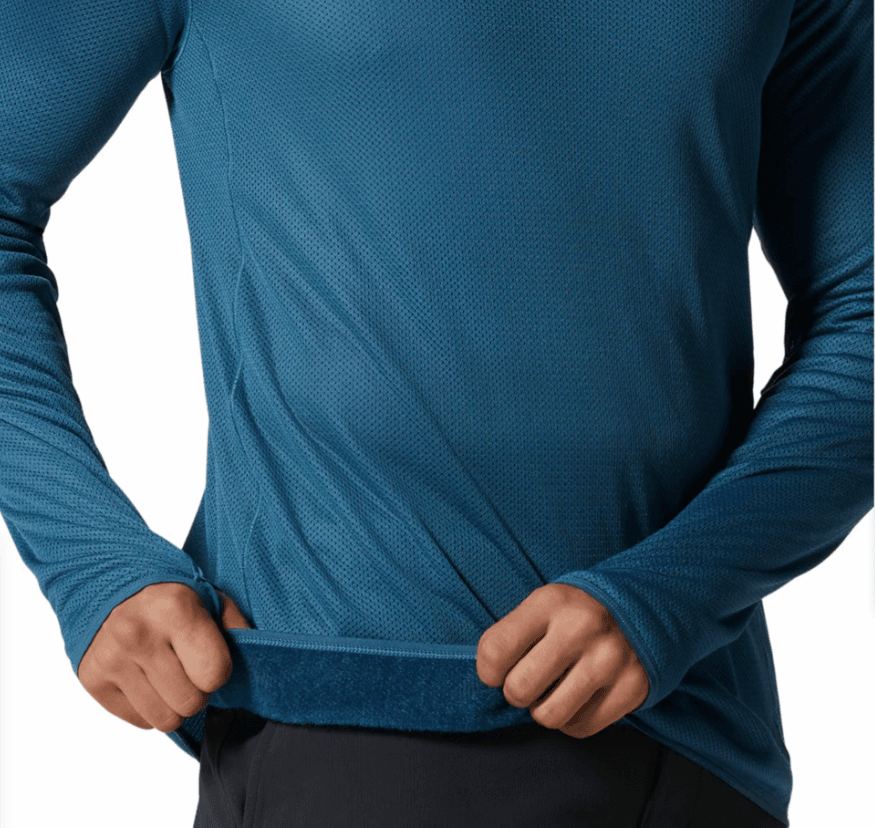
On the inside, the fabric is brushed into a soft, fuzzy surface. Instead of large empty gaps, the wearer feels a continuous layer of plush fibers against the skin, which adds comfort and gentle warmth. On the outside, the fabric is a true mesh: open, airy and extremely breathable. Simply walking around is enough for air to move through the mesh face, carrying away excess heat and moisture.
One more reason why users love this type of fabric is its reversible story. Depending on conditions, the wearer can:
Wear the fuzzy, fleece-like side next to skin for more warmth
Flip the fabric so the mesh side is closer to the body for more airflow and less warmth
This combination of hollow-core yarn, internal air pockets, brushed interior and open mesh exterior is what gives the AirMesh hoody its unique balance of warmth and breathability—and it is also the performance direction many brands want to follow with their own air mesh hoodie / airmesh hoodie programs.
Why the Outdoor Market Loves Air Mesh and Performance Mesh Fabrics
Over the last decade, technical apparel has moved very quickly. End users now expect their mid-layers and base layers to deliver:
Warmth without bulk
Breathability during high output
Fast drying after sweat or light rain
Soft, next-to-skin comfort
Traditional fleece can be warm, but it often traps too much heat and moisture. On the other hand, simple flat knits can be breathable, yet they do not provide enough thermal comfort in changing weather. This is where modern sports mesh fabric and performance mesh fabric fill the gap.
Air mesh and performance mesh fabrics use engineered knit structures and internal air channels to trap just enough warm air, while still allowing constant airflow through the open construction. Therefore, they can support a much wider comfort range: from cool mornings on the trail to steep climbs in direct sun.
Introducing F300-M: Technical Specs at a Glance
To help your sourcing and design teams, here are the key specifications of F300-M:
Fabric code: F300-M
Construction: engineered air mesh knit
Width: 150cm
Weight: 100gsm
Handfeel: soft, smooth and skin-friendly
Target use: performance mid-layer, breathable base layer, lining, hoodie and jacket panels
Although the fabric is light on the scale, the internal mesh geometry is designed to keep a stable shape during sewing and wear. This balance of low weight and structural stability is exactly what many designers look for when they reference mountain hardwear air mesh fabric during development meetings.
Comfort and Next-to-Skin Feel
For performance garments, the first touch on the skin is critical. F300-M offers:
A smooth face that works well under shells or vests
A gentle contact surface on the body, minimizing irritation
Enough body to avoid “cling” when the wearer is sweating
Depending on your finishing choices, F300-M can be brushed on one side to create a softer, loftier inner face, while keeping the opposite side more open and mesh-like. This gives designers room to tell a similar warmth/airflow story to a mountain hardwear air mesh hoodie, while tailoring the exact feel to their own brand.
How F300-M Follows the Same Performance Principles
Many designers use mountain hardwear air mesh as a benchmark when briefing new projects. While we are not affiliated with the brand and do not duplicate their exact Octa® yarn, we deliberately follow the same performance principles in F300-M:
Create micro-air pockets inside the structure to support light insulation
Use an open, breathable geometry to keep air moving
Provide a comfortable, skin-friendly surface on the inside
Allow designers to choose between warmer or cooler orientations in their patterns
Like the benchmark fabric, F300-M is designed to:
Capture a thin layer of warm air close to the body
Move moisture away from the skin and spread it across the surface
Release excess heat quickly through open channels
Maintain comfort during dynamic movement
In practice, this means that garments built with F300-M can transition smoothly from low-intensity to high-intensity activity without forcing the wearer to constantly add or remove layers. The same logic applies whether you are building a mid-layer top, a mountain hardwear air mesh hoodie style product, or a hybrid jacket that mixes different fabric zones.
Key Performance Benefits of F300-M for Your Next Collection
When you are evaluating fabrics for a new performance line, you usually have a checklist in mind. Below are the main benefits of F300-M, written in a way you can easily share with your internal team.
1. Breathability and Thermoregulation
The engineered mesh structure creates micro-air pockets that buffer temperature changes. At the same time, the open channels allow continuous airflow. As a result, the wearer feels less “overheated” compared with solid knit fabrics at similar weight.
This balance is especially valuable in air mesh hoodie or airmesh hoodie designs that must work in a wide range of temperatures and activity levels.
2. Moisture Management and Fast Drying
When the wearer sweats, the fabric helps move moisture away from the skin and spread it across a larger surface area. This supports quicker evaporation, making F300-M a practical mountain hardwear air mesh style material for conditions where fast drying is essential.
For runners, hikers and climbers, the difference between a damp, heavy mid-layer and a fast-drying mesh-based hoodie is easy to feel on any long day outside.
3. Lightweight Comfort (100gsm)
At 100gsm, F300-M is light enough to be used as an all-day mid-layer or a slightly warmer base layer. The low weight also helps brands meet strict packing and shipping targets, especially for online and international distribution.
4. Design Versatility
Because of its stable handle and 150cm width, F300-M works well for:
Pullover mid-layers and technical tops
Lightweight air mesh hoodie and airmesh hoodie concepts
Lining for hybrid jackets and vests
Panels on the back or underarms for extra ventilation
For brands exploring sports mesh fabric beyond simple jerseys, F300-M provides a clean, modern look with more structure and thermal comfort than ordinary open-hole meshes.
Typical Applications: From Hoodies to Backpack Panels
To make development easier, here are some typical use cases our B2B partners have explored with F300-M:
Performance hoodies – Lightweight, breathable air mesh hoodie styles that can replace traditional fleece and work as everyday pieces for active users.
Technical mid-layers – Hiking, climbing or trail-running tops that need reliable breathability during high heart-rate efforts.
Hybrid jackets – Body-mapped designs where F300-M is used in high-heat zones, while more wind-resistant fabrics are placed on the chest and shoulders.
Base layers for cool weather – Next-to-skin garments designed for active winter sports or shoulder season conditions.
Lining for vests and shells – F300-M can be used as a comfort lining that improves moisture transport inside outer shells.
Backpack and luggage panels – Breathable support zones where contact points need both cushioning and ventilation.
If your brand already works with performance mesh fabric for training or outdoor collections, F300-M can slot into your existing product architecture with minimal adjustment and allow you to create more premium, technical stories.
Supply, Customization and Support for Brands
Choosing the right performance mesh fabric partner is not only about the material itself. It is also about how smoothly that fabric can be integrated into your development and production cycle.
Here is how we support B2B buyers:
Consistent Production Batches
We control key parameters such as yarn selection, knitting and finishing, ensuring that shade and performance remain stable across orders.Color Development
We can develop custom colors based on your lab dips or Pantone references, aligned with your seasonal palette.Finishing Options
Depending on the end use, we can discuss additional finishes such as wicking, anti-odor or softener treatment to match your product story.Flexible Order Quantities
For new projects, sampling and smaller trial orders are available. When the product is validated, we can scale to full-season bulk production.
Because we position ourselves as a technical mesh and air mesh supplier, our team is prepared to talk not only about price, but also about performance targets, testing methods and long-term supply plans.
How to Brief Your Team When Sampling F300-M
When you introduce F300-M to your internal stakeholders, a clear brief can save weeks of back-and-forth. Consider sharing the following points with your design and development teams:
Benchmark: “We are looking at this as a mountain hardwear air mesh style fabric.”
Product ideas: “We are considering mid-layers, a mountain hardwear air mesh hoodie style piece, and versatile air mesh hoodies for multi-sport use.”
Weight target: 100gsm fabric, aiming for a light but not fragile garment.
Handfeel: soft, comfortable and suitable for next-to-skin wear.
Applications: performance hoodies, mid-layer tops, hybrid jackets, lining panels or ventilated zones.
Testing: breathability, drying time and pilling resistance according to your usual standards.
This type of structured brief helps everyone compare F300-M quickly with existing materials and provides a realistic starting point for proto samples and wear tests.
Conclusion: Build Your Own Mountain Hardwear Air Mesh Story with F300-M
The popularity of mountain hardwear air mesh and its hoodie styles has shown that end users are ready for smarter, more breathable mid-layers and base layers. The combination of hollow-core yarns, internal air pockets, a brushed, fuzzy interior and a mesh exterior has set a clear benchmark for what modern air mesh can do.
Our F300-M air mesh fabric is designed to give outdoor and sports brands the same performance direction—lightweight warmth, high breathability and fast drying—while adding the advantages of scalable production, custom colors and B2B-friendly support.
If you are searching for a mountain hardwear air mesh fabric style material from a reliable partner, F300-M is a strong starting point for your next collection. You can request sample yardage today, compare it side by side with your current sports mesh fabric options, and see how this modern air mesh construction can refresh your hoodie, mid-layer and hybrid outerwear lines.